Welcome to the International Beat newsletter. I'm MLB.com's Michael Clair and I'm glad you're here. |
|
|
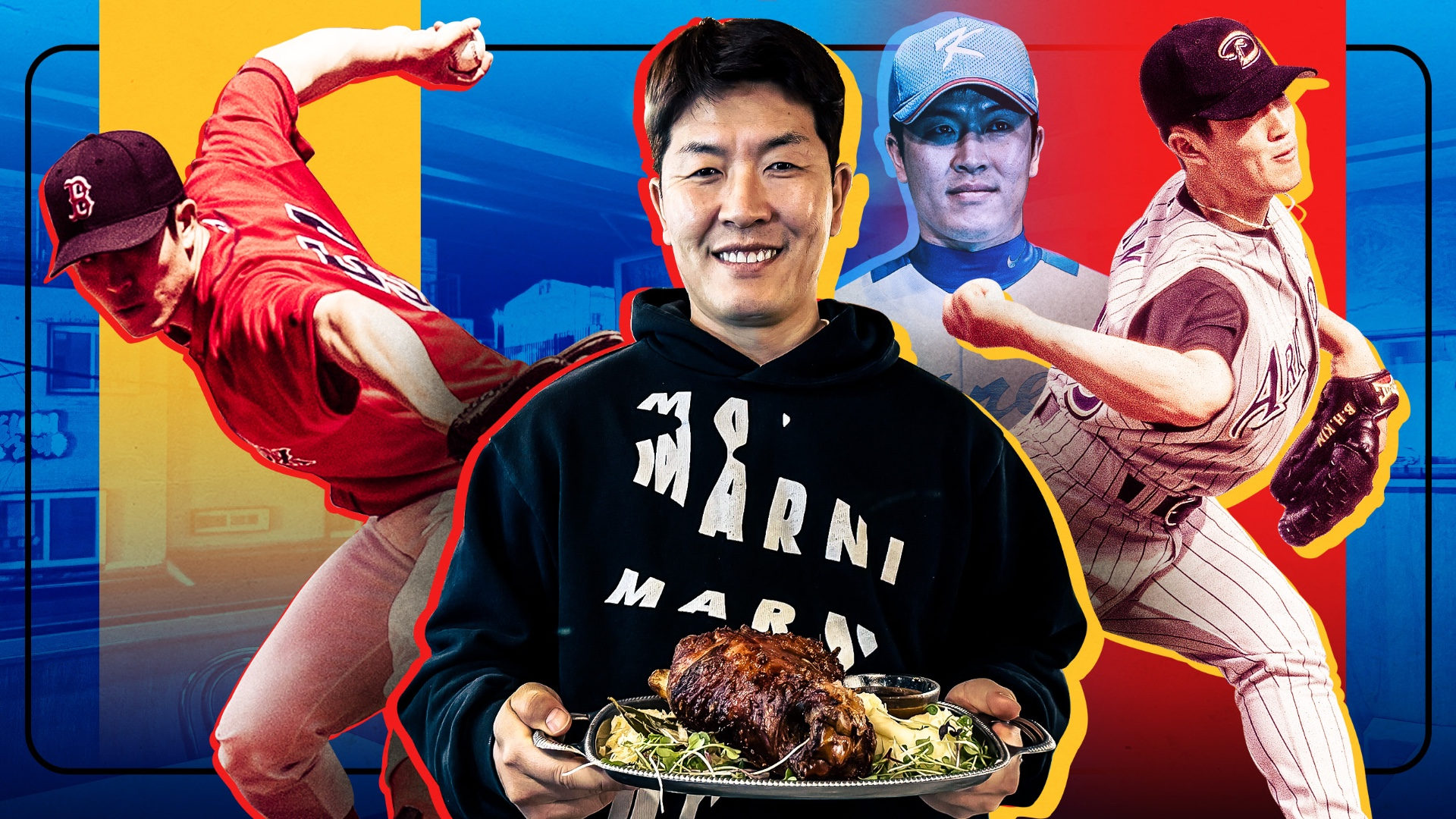
Thanks to his unique submarine delivery, Byung-hyun Kim always stood out on the Major League diamond. Now, the former big league pitcher stands out for another reason: The World Series winner – the first Korean-born player to play in the postseason, much less return with a ring – now owns and operates a decorated German sausage restaurant, Metz Hannam, in Seoul’s Yongsan district. Dressed casually cool in a black hoodie and green, military-inspired slacks, Kim recently welcomed us into his restaurant, serving up a bountiful feast of German specialties. He started with his personal favorite, and the only dish that can go toe-to-toe with his mother’s kimchi for his all-time favorite dish: Schweinshaxe, a pork knuckle known for the delectable crispy skin which encases tender, juicy meat.
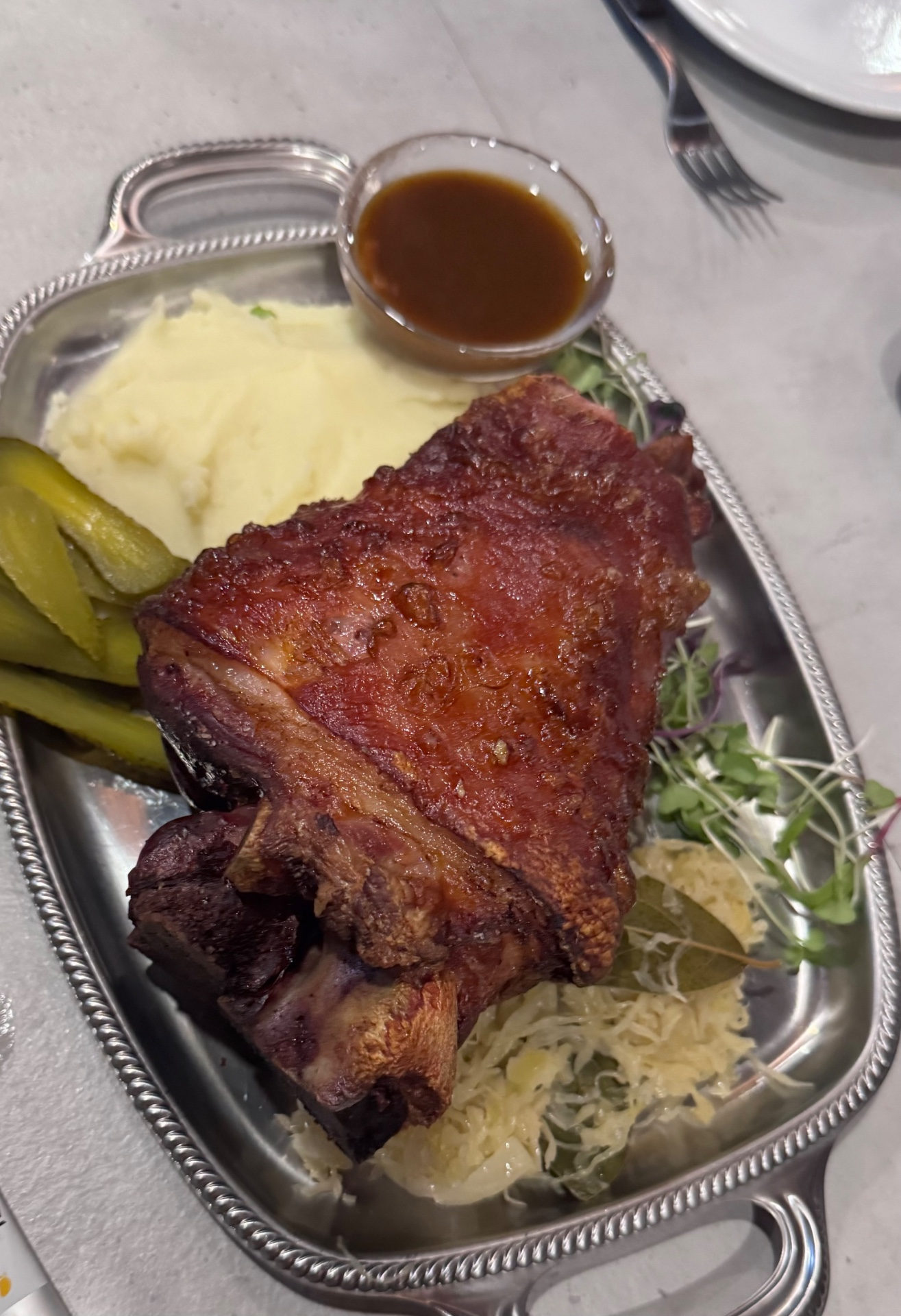
“The first time I tried the Schweinshaxe – the crunchiness on the outside, the juiciness on the inside – it was otherworldly,” Kim said, a wide smile on his face. “Korea is known for their fried chicken, but it was a different world. That was a life changer.”
|
|
|
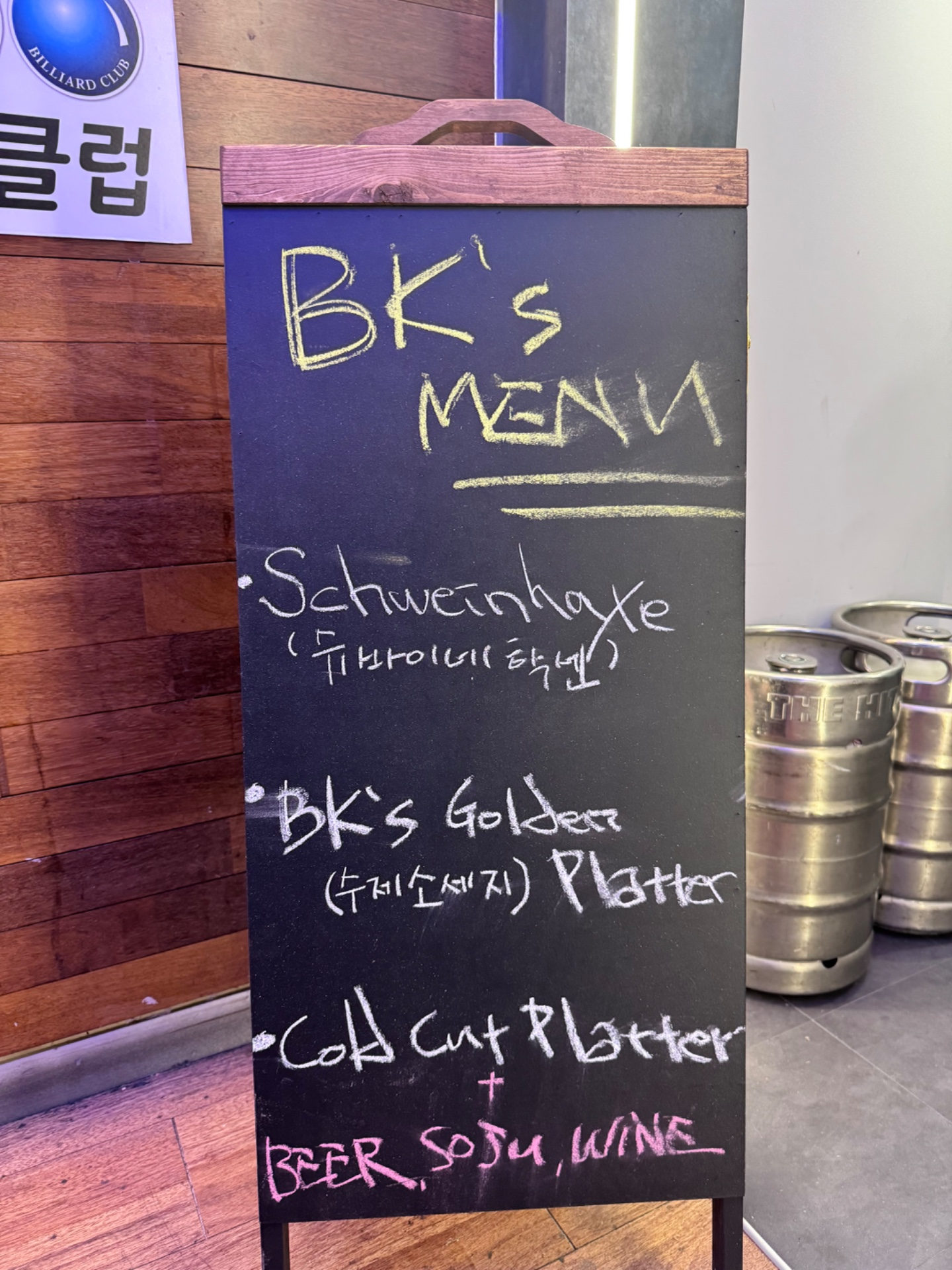
The menu outside Byung-hyun Kim's restaurant, Metz Hannam. |
|
|
You can actually thank baseball – and the global tours that it took Kim on – for his turn from the bullpen to the kitchen. He remembers the first Burger King he walked into when he was playing for Korea’s U-18 team at the 1995 World Juniors Championship outside Boston. (Naturally, Kim struck out 13 batters in just 10 innings pitched.) “I tried Burger King for the first time and that’s when I realized the burgers that I’d had were not burgers,” Kim said with MLB’s Sunjae Song translating. “This was a real burger. That changed my view. The Cokes, the french fries: Everything was massive.” While that memory lived on in his mind, it was only later, after he was established in the Major Leagues, that he started dreaming of doing this with his life after he retired. “When I was playing in the States, any time families and friends would come, I would take them out to a restaurant that I recommended. I saw the joy that people felt from having good food,” Kim said. “That's where it all started.” He began with three sushi restaurants in San Diego – today there is only one, Umi Sushi – before he followed his teenage dream and opened a handful of burger and hot dog joints, with two of the locations inside KBO stadiums at the Gocheok Sky Dome and Changwon NC Park. “The inspiration was Gonzo's Grill in Arizona at Chase Field,” Kim said, referring to the ballpark eatery named after D-backs legend Luis Gonzalez. “I saw that and I really wanted to replicate it and have a burger joint at a baseball stadium.” |
|
|
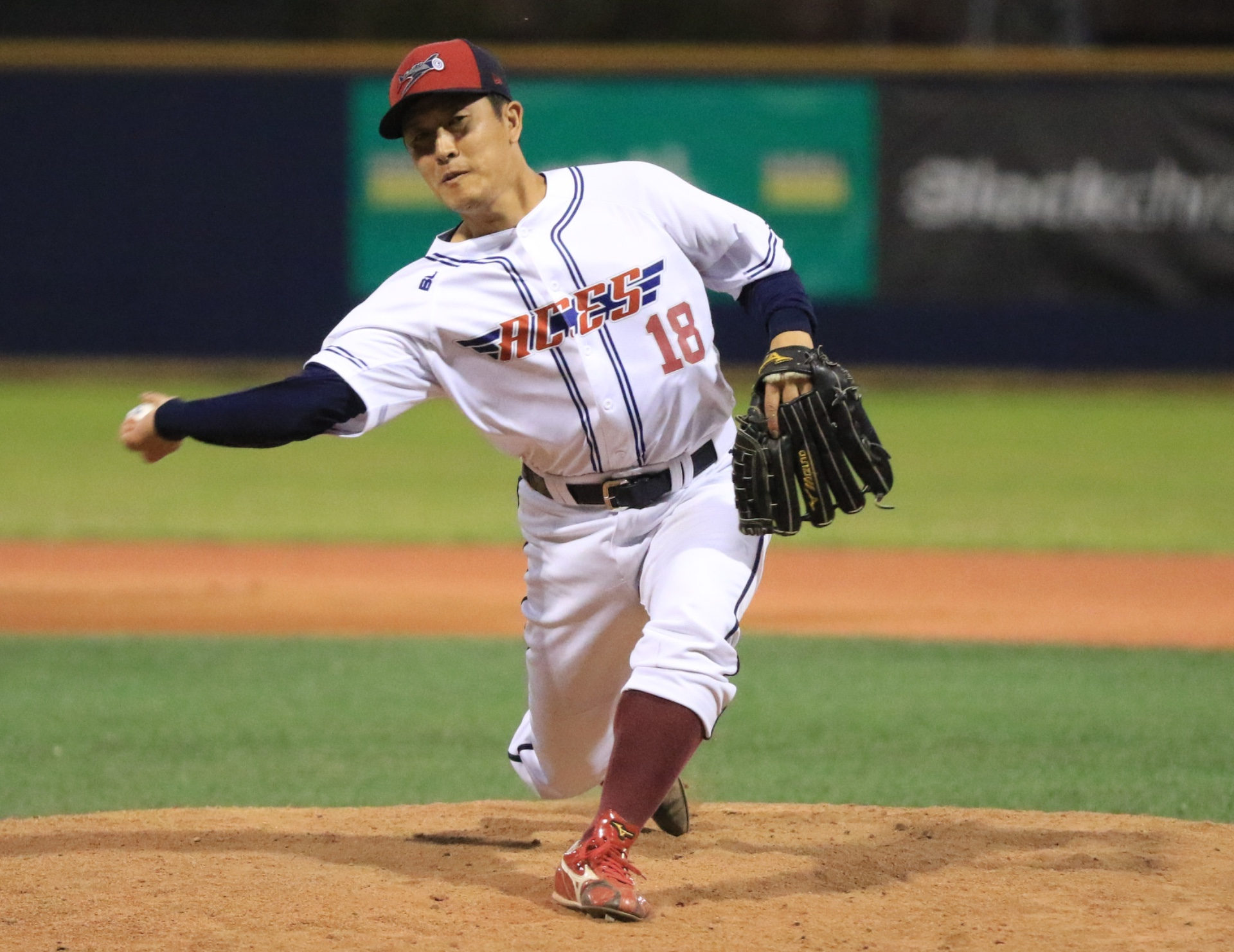
Kim didn't just pitch in America and Korea: He also pitched for the Melbourne Aces, then of the Australian Baseball League, in 2018. Photo courtesy ABL. |
“Obviously, baseball was my world,” Kim said. “It was my passion when I was younger and I succeeded. But once I was done with my playing career, I felt a little bit of an emptiness. As an adult, this is something I got into and really poured my passion into.” He began by seeking out the first Korean sausage meister – the title given to those who master Germany’s famed dish. Seong Chun Lim had the title for 40 years and when “I tried his sausage for the first time, I was hooked on it.” Kim then trained under him, learning the process of making the sausage up to such a high standard for nearly a year. Though Lim has passed away, his son Hyung Jin Lim now works in Kim’s restaurant. Next, Kim wanted to improve upon the sausage that was available in the area. “In Korea, and to a certain degree in the United States, when you think of ham or sausage, you think of processed meat, and it's usually not very healthy for you,” Kim said. “But I really wanted to change that and show that sausages can be quite healthy and nutritious. It’s less fatty than usual sausages and we use 98 percent natural ingredients. It’s definitely a healthier option.” |
Kim's Schweinshaxe -- his favorite dish. |
While he has remained true to the traditional German recipes – you can get sauerkraut here, but no kimchi – Kim wanted to source as much of the meat and ingredients locally. The garlic and chili peppers come from Uiseong and Cheongyang respectively, areas known for these specialties. While Kim has no desire to make this a fusion restaurant, there is one dish that combines the two cultures. It’s his take on budae-jjigae, or Korean army soup. The dish ties back to the Korean war when the impoverished citizens of South Korea would use the leftover spam and other processed meats left over from the American military bases in a spicy kimchi-style soup. Though the dish was first born out of necessity, it has remained popular to this day. For Kim, though, he wanted a take on the dish that didn’t use poor quality meats loaded with preservatives. “It was processed meat, so it was generally unhealthy,” Kim said. “I changed that to healthier sausages to make it a premium option. Obviously, today where K-food is becoming more and more popular, I’m looking at it as a kind of entry point.” |
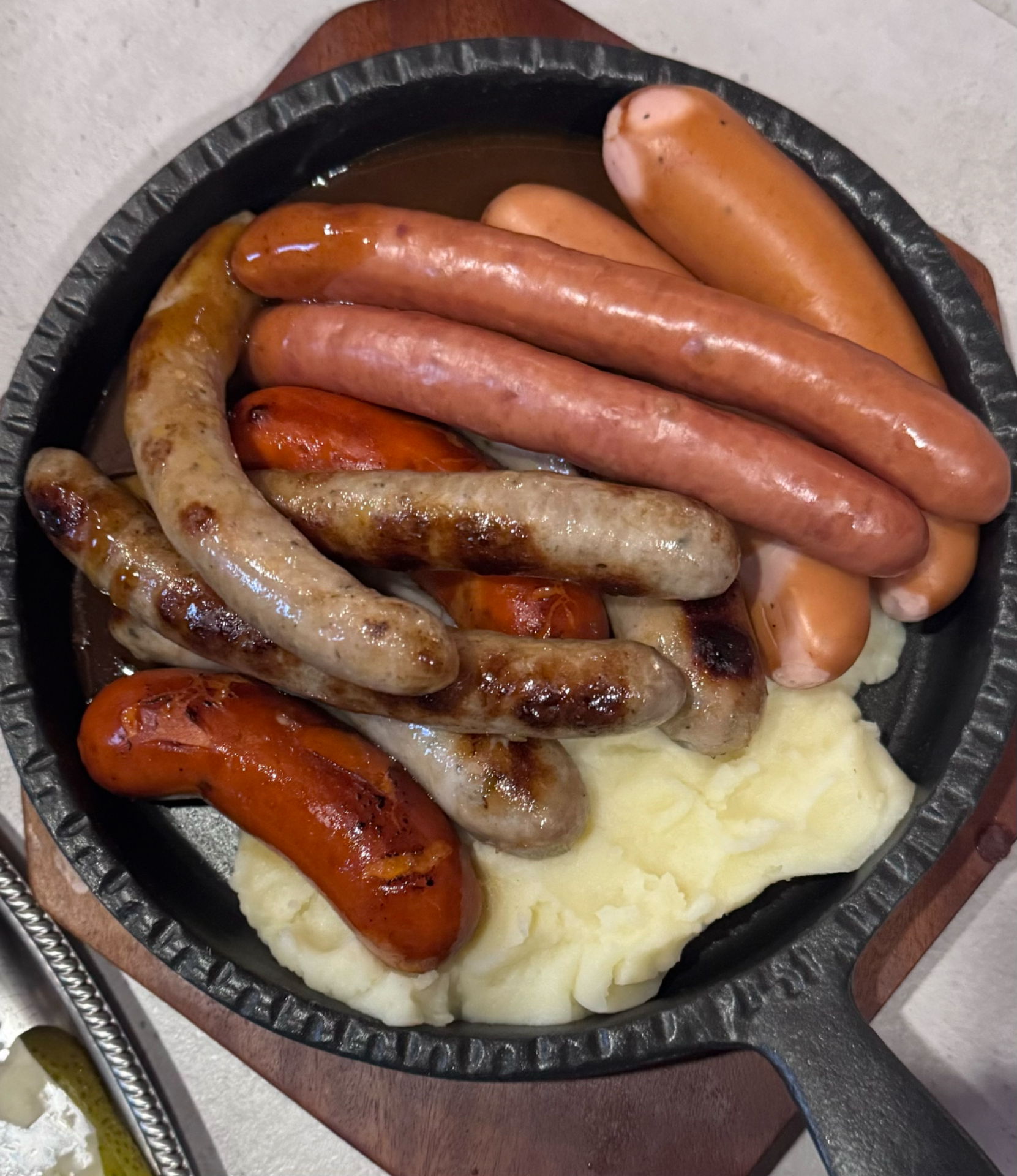
A selection of Kim's sausage varieties. |
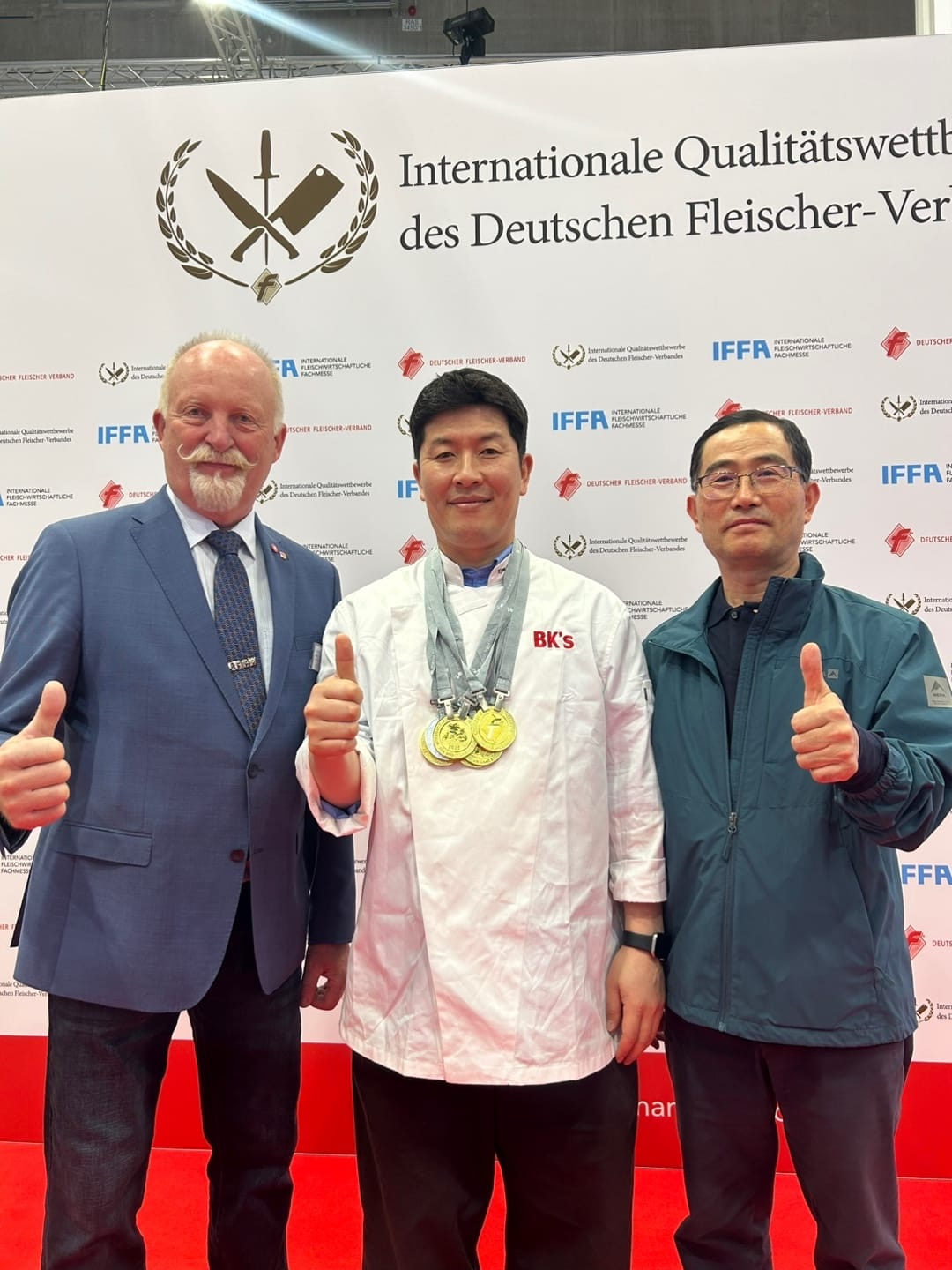
It was enough to sway the judges from the German Butchers’ Association, who awarded Kim with seven awards for his budae-jjigae. “For me to do what I’m doing, to win the competition, it means a lot – especially when people eat it and enjoy it and genuinely like it,” Kim said. “That’s the most meaningful.” |
Kim with the medals he earned from the German Butchers' Association. |
|
|
A LOOK INSIDE THE WORLD OF JAPANESE BASEBALL |
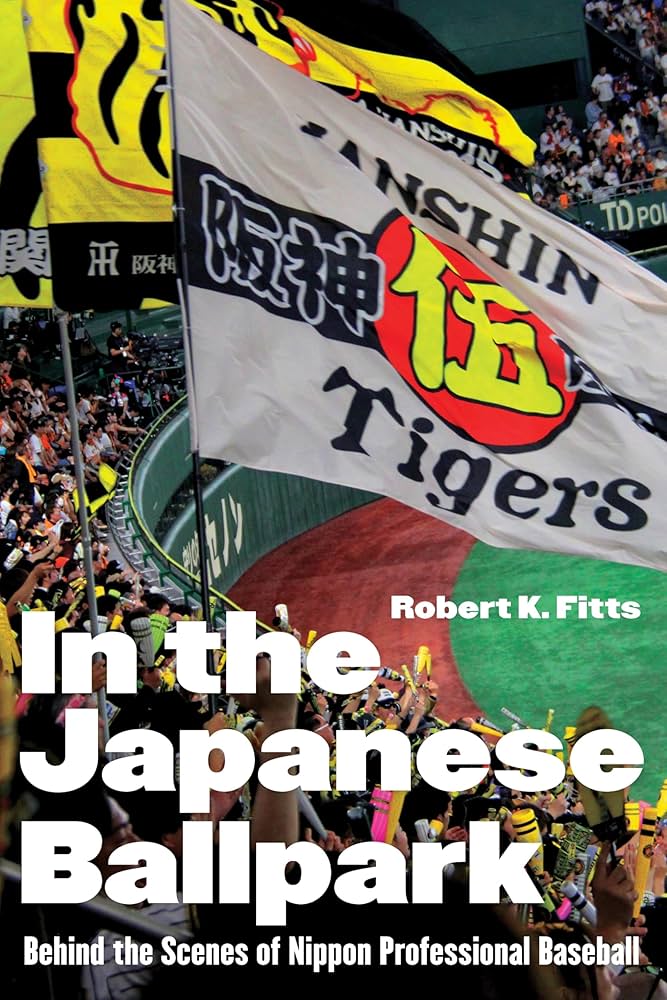
Cover for Rob Fitts' book "In the Japanese Ballpark." |
When it comes to Japanese baseball, there are few people more well-versed in the game and its history than Rob Fitts. The historian and author has penned 11 books, including “Mashi,” about Masanori Murakami, the first Japanese player in Major League history, and “Banzai Babe Ruth,” about the famed 1934 Tour of Japan. His newest book, “Inside the Japanese Ballpark,” available from the University of Nebraska Press (Disclaimer and blatant self-promotion: I also have a book coming out from the publisher) takes a very different approach. This time, Fitts speaks to people from all parts of the Japanese baseball world, who each get a chapter to explain their role. There are general managers, athletic trainers, mascots, even a uriko, the name for the Japanese beer vendors who carry kegs of beer upon their backs. I recently got on the phone with Fitts to talk about the book. Here is our conversation, edited for length and readability. MLB: How did you begin to write about Japanese baseball? Rob Fitts: I was always a baseball fan from a little kid, and my wife had spent her senior year in high school as an exchange student in Japan and she became a Japanese major in college. Soon after we were married, she was transferred to Tokyo for a couple of years, and I went along. At that time, I was still an archeologist. I was working on my PhD, and I could basically do the research and write it up anywhere. Our very first night in Tokyo, I showed up completely jet lagged and get to the hotel. I was zonked, and she's like, "We have baseball tickets." The game just blew me away. I had never seen anything like this before. The Japanese fans are so into it. You have the ōendan, the official cheering sections, who are singing and chanting, and they're blowing horns and they're beating drums and waving flags. And the stadium, I think it was May, but it had the atmosphere of a World Series game. I was just like, "This is the best baseball game I've ever been at." So, the next day, my wife went to work, and I was in Tokyo by myself, and I went out looking for baseball cards. Basically that's how I got to know Japan. I was on my own most days while my wife worked. I would work on my PhD, and then I would travel around Tokyo, looking for baseball cards, going to games, meeting people, Americans who were interested in baseball, and it became a passion of mine. But it wasn't until about 10 years later, when I was selling baseball Japanese baseball cards on this new thing called the internet, called eBay, and I needed to convince Americans that they wanted to buy Japanese baseball cards. So I started learning more about the history of the game and writing player profiles and trying to sell cards. I realized this is actually what I wanted to do. In about 2003 or 2004, I switched over. MLB: There are so many people from various backgrounds in the book. How did you connect with all of them? RF: I would say about a fourth of the people are those I have very strong relationships with, like Bob Whiting and Jim Allen. I've known those guys for 30 years, and they helped me get in touch with some people. The others, I found on the internet. I went on LinkedIn, and I started searching for NPB, or searching for Yomiuri Giants, and then just making a list of people who worked for the team who seemed to be able to read English. I just reached out cold to them, and I said, "I'm working on this book. Would you be interested?" And I was surprised at the number of people who said, "Sure, I’ll do that," right away. And then once I met one person, I would ask, "Who else can I talk to?" MLB: This book is so different from your others. Where did the idea come from? RF: The genesis is in the preface. I went to Japan in the fall of 2023 on one of Shane Barclay's JapanBall tours, where we saw all 12 ballparks in something like 15 days. And I did that because I had reached a personal crossroads where I felt that I had written about almost every topic I could in Japanese baseball with my language skills. So, I decided to go and see if I can kind of recapture my excitement about Japanese baseball, or if I didn't, I would move on and find another topic to write about. I'm sitting there on day number one, game number one in the heat, wanting a beer. It was actually a dull game, so I was walking around the ballpark, and I noticed this young lady carrying the kegs of beer up and down and up and down these stairs in this heat. I'm thinking, "My God, what a life, what a job. I wish I could talk to her about that." And then I realized that I didn't know almost anything about what happens off the field in Japanese baseball. I had a good understanding of the history, but I had almost no understanding of how the stadium works and what the players did when they're not actually playing the game, and things like that. So really, within a few hours, I had an idea for the new book. |
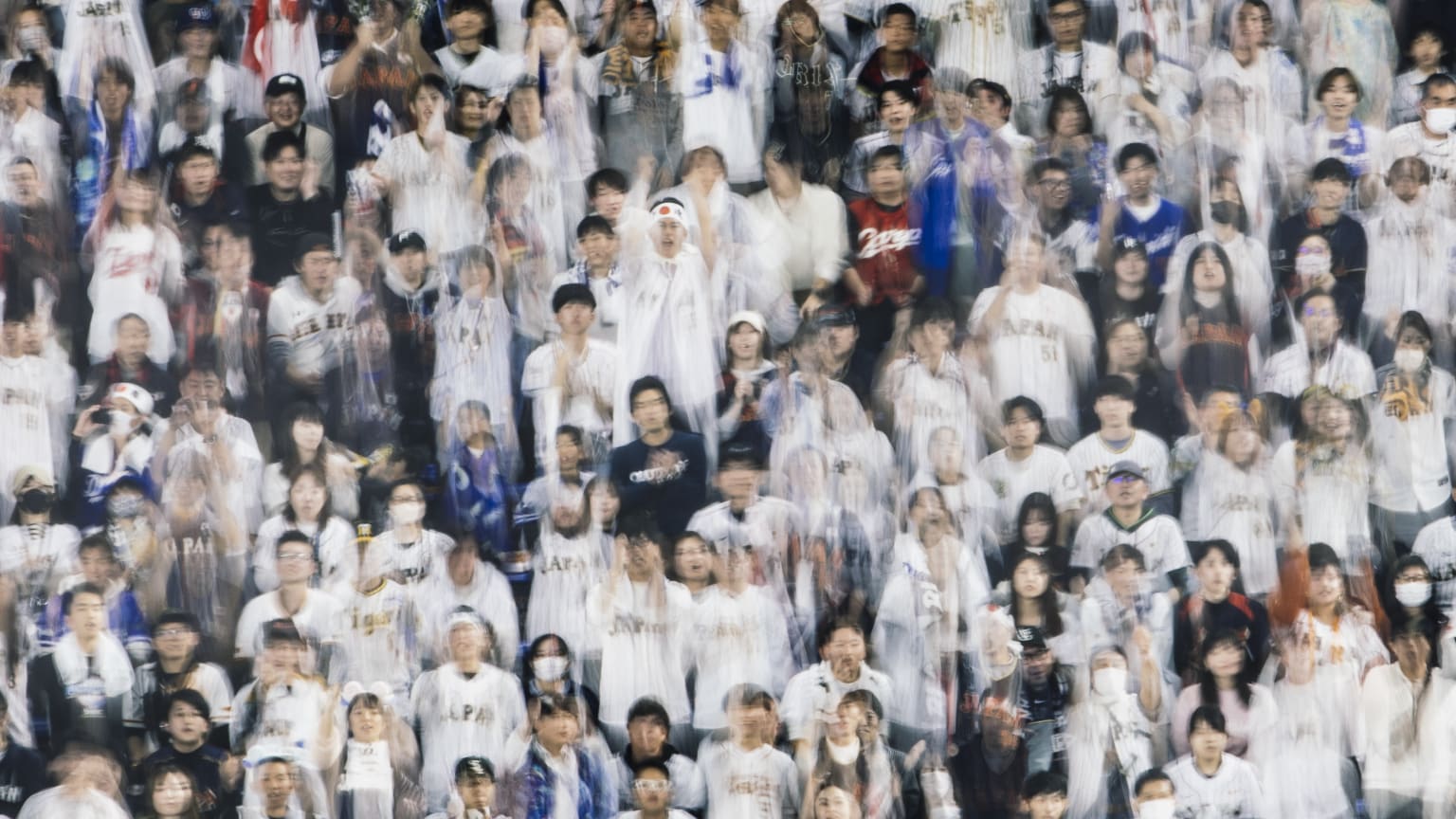
The cheering section at the Tokyo Dome captured mid-song during the 2024 Premier12 tournament. Photo by Joe Na. |
MLB: For someone who has been in Japanese baseball for so long and has done so much, what was the most eye opening thing you learned during the writing? RF: There's two things that I learned: One, I was very surprised about the mascots and the idea that the mascot identity has to be kept secret. The integrity of the mascot, they call it. It took me a long time to connect with the Hiroshima Carp mascots. Hiroshima Carp mascots are always American. It's a tradition. The other thing that I was really surprised at is that I asked pretty much every single person, including the beer girl, "What's the future of Japanese baseball?" I expected people to say, "You know, we're worried [about players like Ohtani leaving]." But only a couple people answered that, and those were Americans, really. The Japanese all said, "I think it's good." They said, "We want Japanese baseball to expand the fan base. We want it to be stronger. And we think the attention it gets from Americans, from the international audience, will make Japanese baseball stronger." MLB: So let’s go back in time. That Rob Fitts who landed in Tokyo in 1993. What would the archaeologist say if he saw you now had 11 books out about Japanese baseball? RF: I've always been a very directed kind of competitive person, so at that point in my life, I wanted to be like the best archeologist in the world. I mean, I've never succeeded, but I've always strived to really, you know, I've been very competitive with myself, and I've always strived to do my best. So, I don't know if I would have even liked the idea. But having said that, I was a huge baseball fan from the time I was 10 years old. I wanted to be a baseball player, and knew that wasn't going to happen. And my grandma said from an early age I should become a baseball writer. Even before I learned how to write it at a good enough level to actually sell a book, she said "You should do this. You talk about it all the time.’" So, I guess it didn't come from out of the blue. I mean, I thought that when I was working for the Hall of Fame this past year, I couldn't believe it. I mean, that is my 10 year old dream. If I couldn't be in the Hall of Fame as a player, it would to be working there.
For more from Fitts, you can purchase his book, check out RobFitts.com and subscribe to SABR’s Asian Baseball blog.
|
|
|
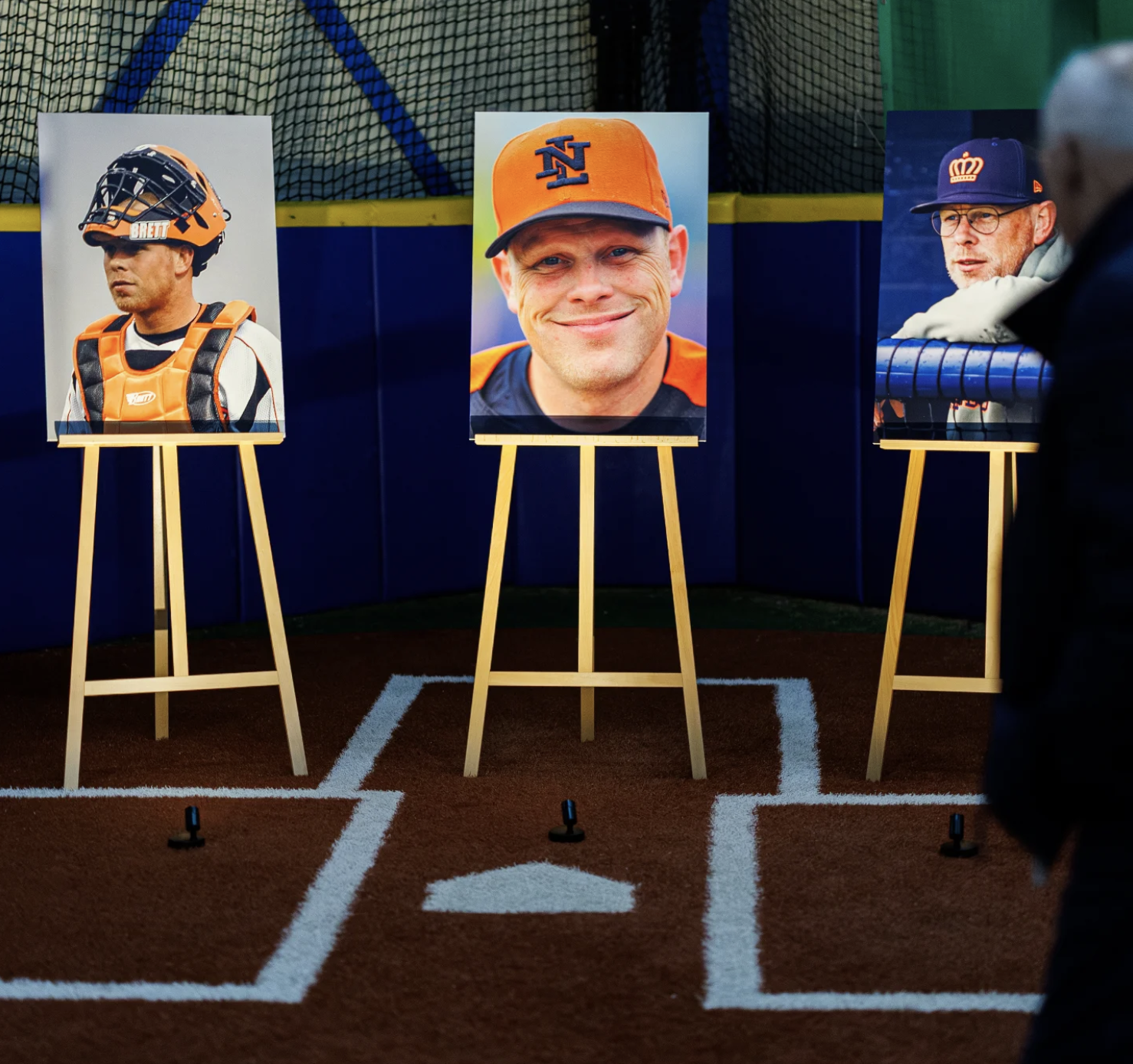
Photo from the memorial for Sidney de Jong. Click photo to view post by @HonkbalSoftbalNL. |
- Sad news for everyone in the Dutch baseball community: Sidney de Jong, who played 200 games for the national team and came up with the clutch leadoff double to help defeat the D.R. in 2009, passed away recently. He was expected to be a coach for the team this spring.
- The international signing period opened! Jesse Borek has all the news on all the players you need to know. Read more here.
- The WBSC announced who will be playing in the Premier12 Qualifiers later this year. It's the first time that teams ranked outside the top-12 have a chance to qualify for the tournament.
- Mariners outfielder Julio Rodríguez -- along with some of his superstar friends -- helped make some state-of-the-art refurbishments to a baseball/softball and soccer complex in his hometown of Loma de Cabrera. Daniel Kramer has more.
- So many players have raised a hand for the World Baseball Classic in recent weeks! Far too much to summarize here, so just a reminder to keep an eye on the official website where we have full coverage.
|
|
|
FORWARDED FROM A FRIEND? SUBSCRIBE NOW |
|
|
To subscribe to International Beat, visit this page and mark "International Beat" from our newsletter list. For tips, hints, or just to talk about international baseball, find me @michaelsclair on X/Twitter and IG or email me at Michael.Clair@MLB.com. |
|
|
© 2026 MLB Advanced Media, L.P. MLB trademarks and copyrights are used with permission of Major League Baseball. Visit MLB.com. Any other marks used herein are trademarks of their respective owners.
Please review our Privacy Policy.
You (michael.clair@mlb.com) received this message because you registered to receive commercial email messages or purchased a ticket from MLB.
Please add info@marketing.mlbemail.com to your address book to ensure our messages reach your inbox. If you no longer wish to receive commercial email messages from MLB.com, please unsubscribe or log in and manage your email subscriptions.
Postal Address: MLB.com, c/o MLB Advanced Media, L.P., 1271 Avenue of the Americas, New York, NY 10020.
|
|
|
|