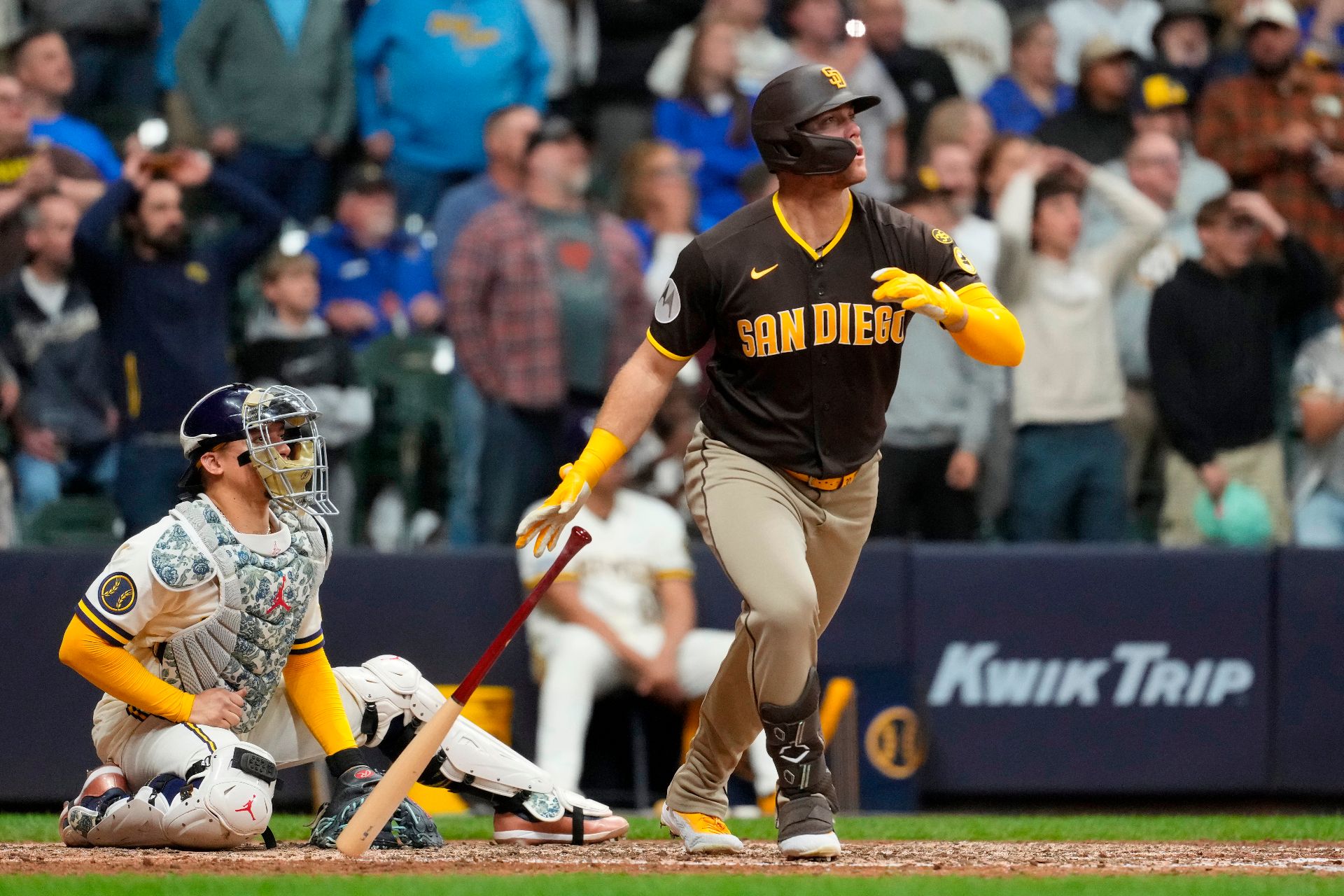
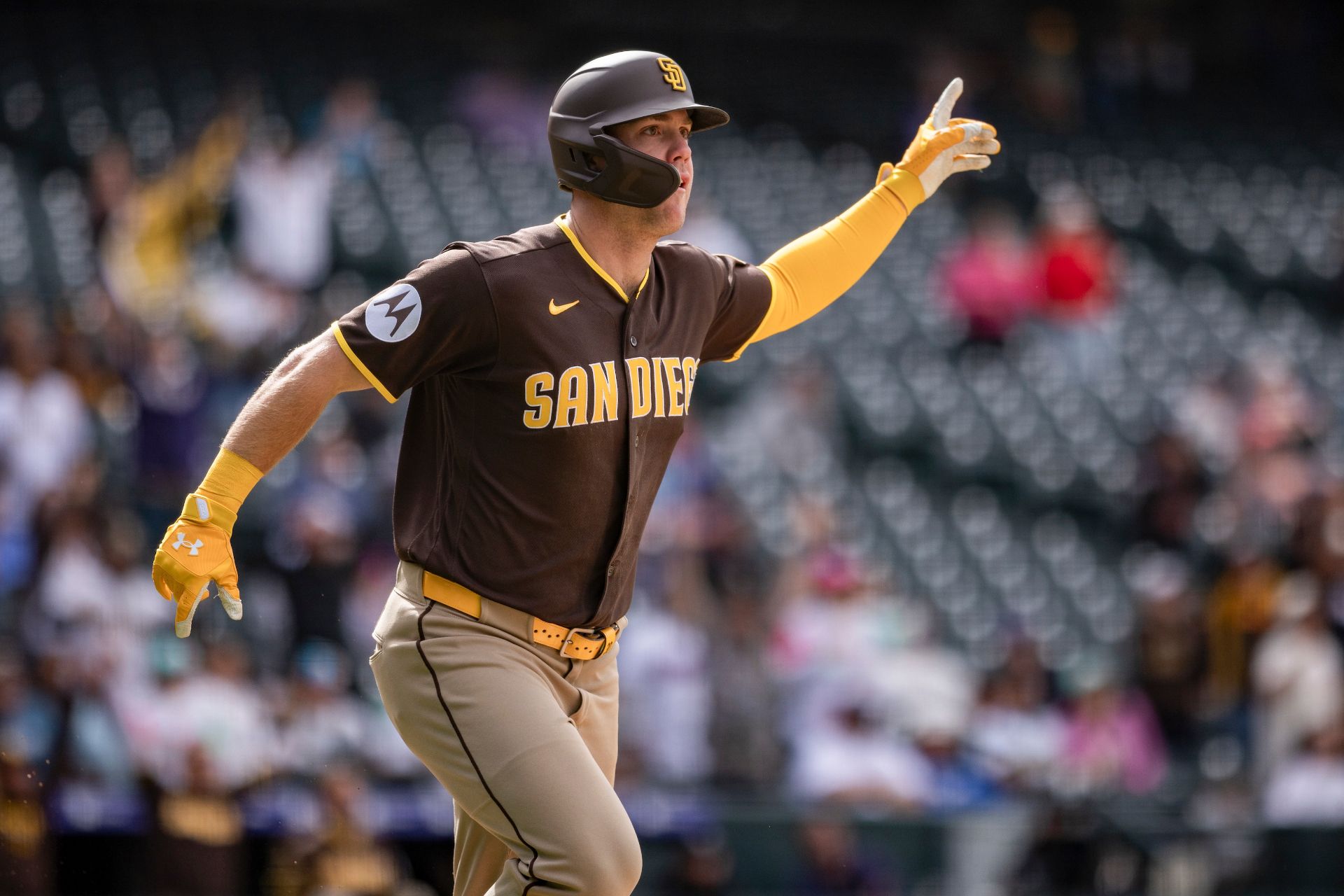
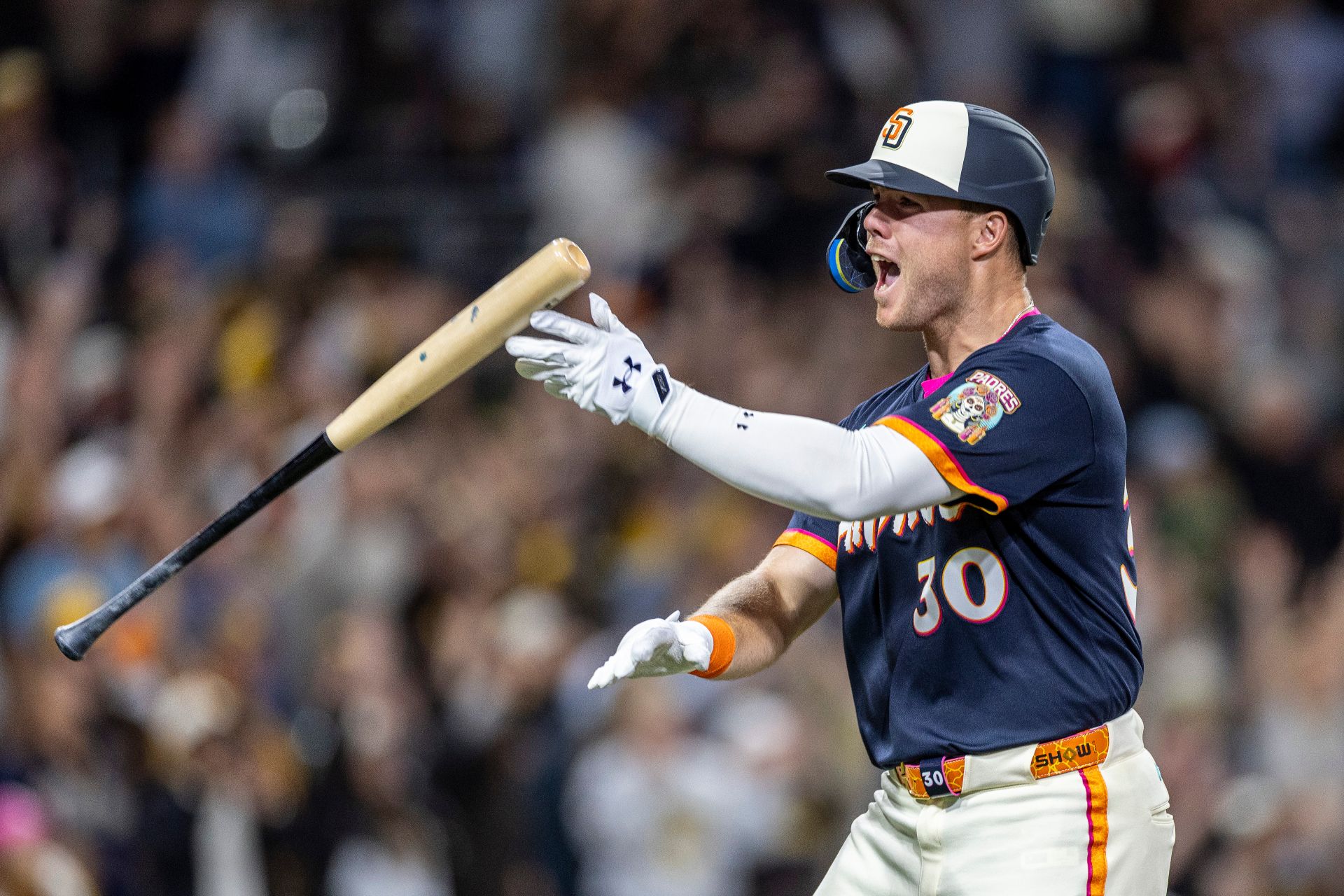
The Padres signed Sheets to a Minor League deal in February 2025 and saw the left-handed batter produce a .746 OPS and 19 home runs in 145 games. Sheets was a valuable player for the Padres, spending a bulk of his time either in left field or at designated hitter, but also playing some first base.
San Diego rewarded Sheets by essentially naming him the everyday first baseman coming into this season. It’s proven to be the right choice, given what he’s done at the plate so far this year amidst the Padres’ ongoing struggles at the plate. It’s not hyperbole to claim that Sheets has really carried San Diego’s offense so far -- Miguel Andujar and Ty France were the only other Padres with an above-average OPS+ in at least 100 plate appearances.
So, how exactly did Sheets turn his career around to become the most important hitter for a team in a playoff position? It’s remarkably simple, but Sheets has basically just hit the ball harder as a Padre.
After posting a 6.3 percent barrel rate in four seasons with the White Sox, Sheets was running a 9.5 percent barrel rate with the Padres. Ditto for his hard-hit rate: it went from a 36.0 percent clip with Chicago to a 46.5 percent rate with San Diego.
Some of that can be attributed to a sizable increase in bat speed since coming to San Diego. In his final year and a half with the White Sox -- Statcast’s bat tracking began monitoring this in the second half of the 2023 season -- Sheets had a 72.7 mph bat speed. That number has jumped to 74.8 mph with the Padres.
That’s a big deal, since every 1 mph of bat speed earns you approximately six more feet of distance, according to MLB.com’s Mike Petriello when the stat was first introduced. And it immediately produced results, as Sheets hit a career-high 19 home runs last year and is on pace to surpass that mark this year.