Welcome back to the Rays Beat newsletter, which will land in your inbox throughout the season. |
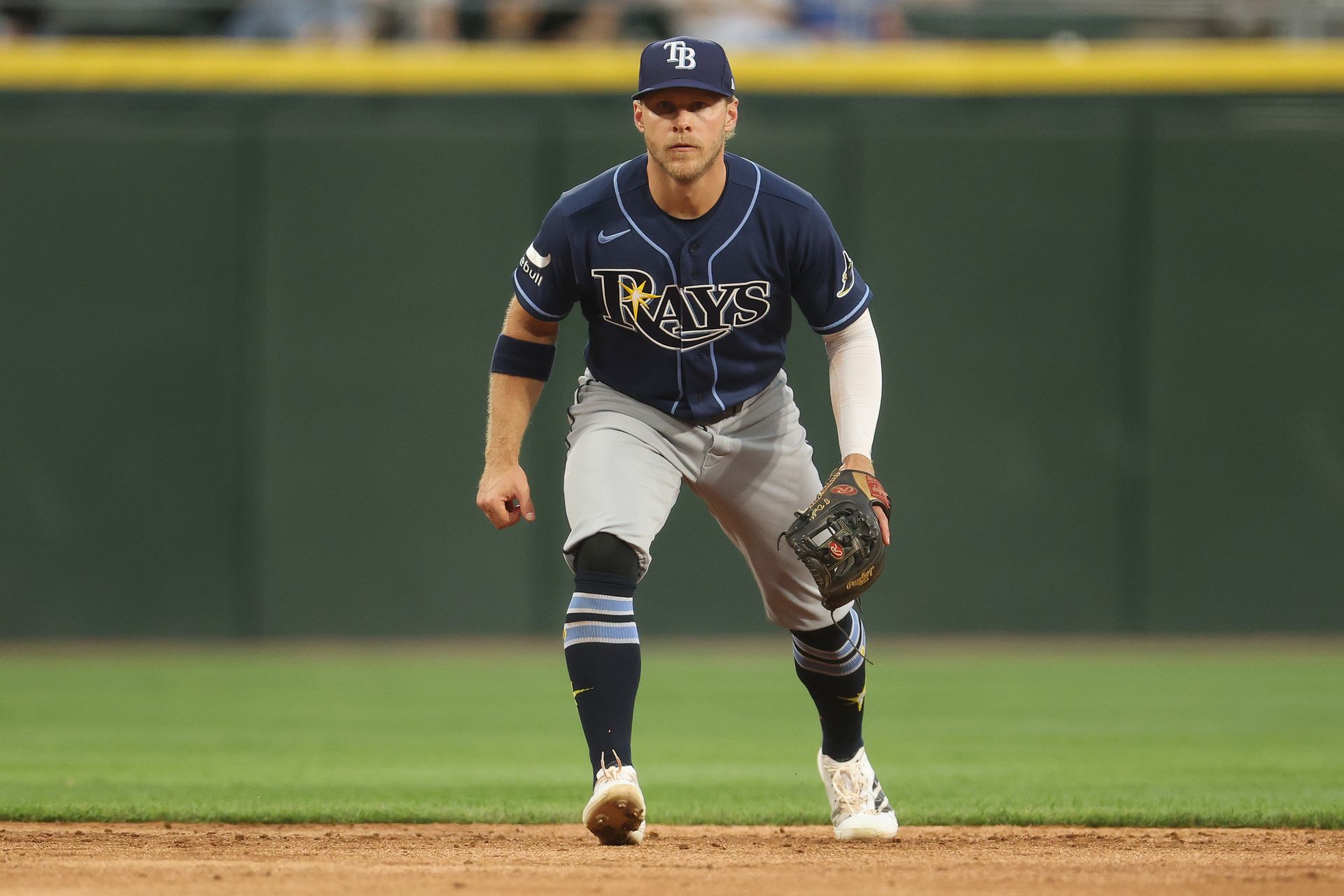
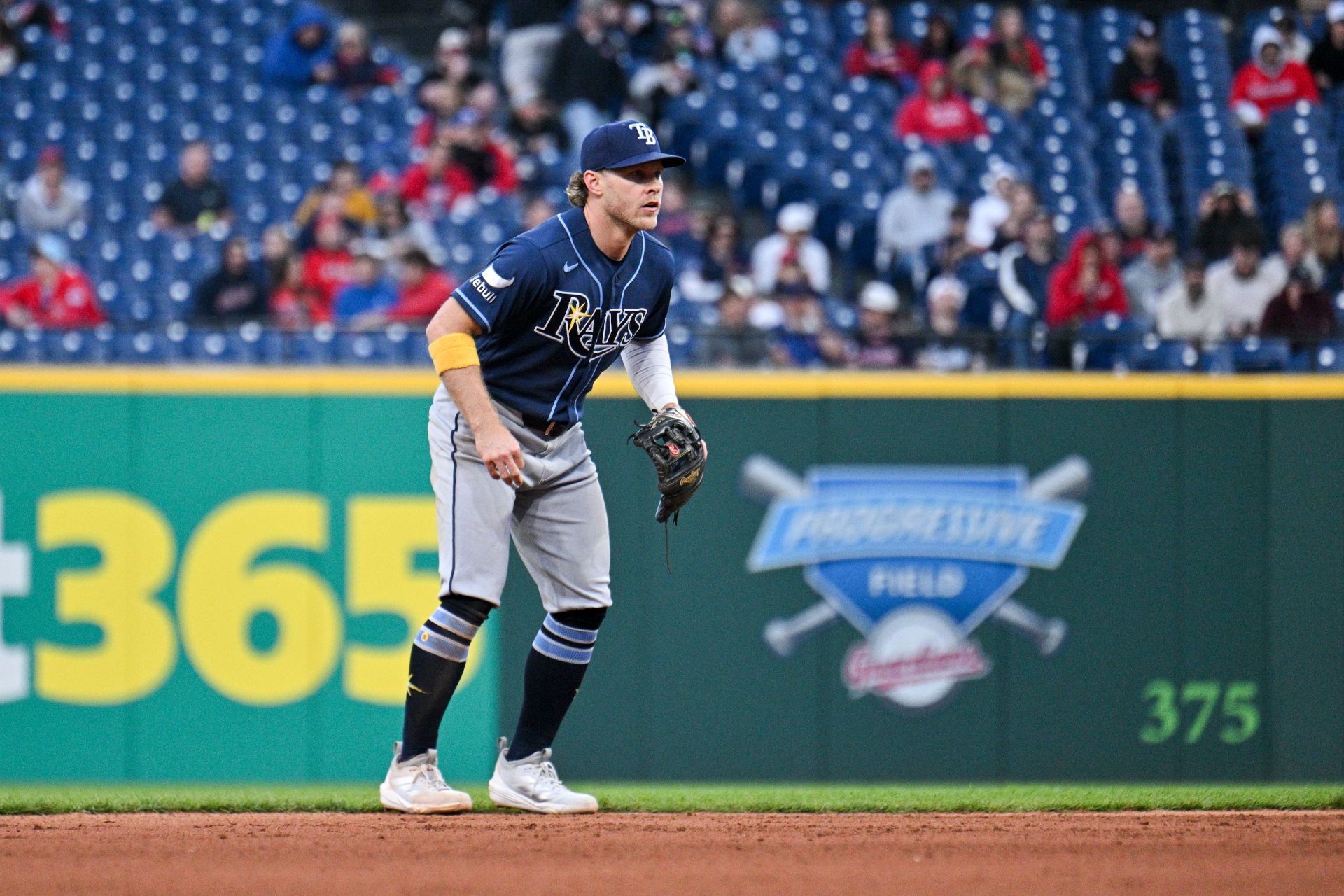
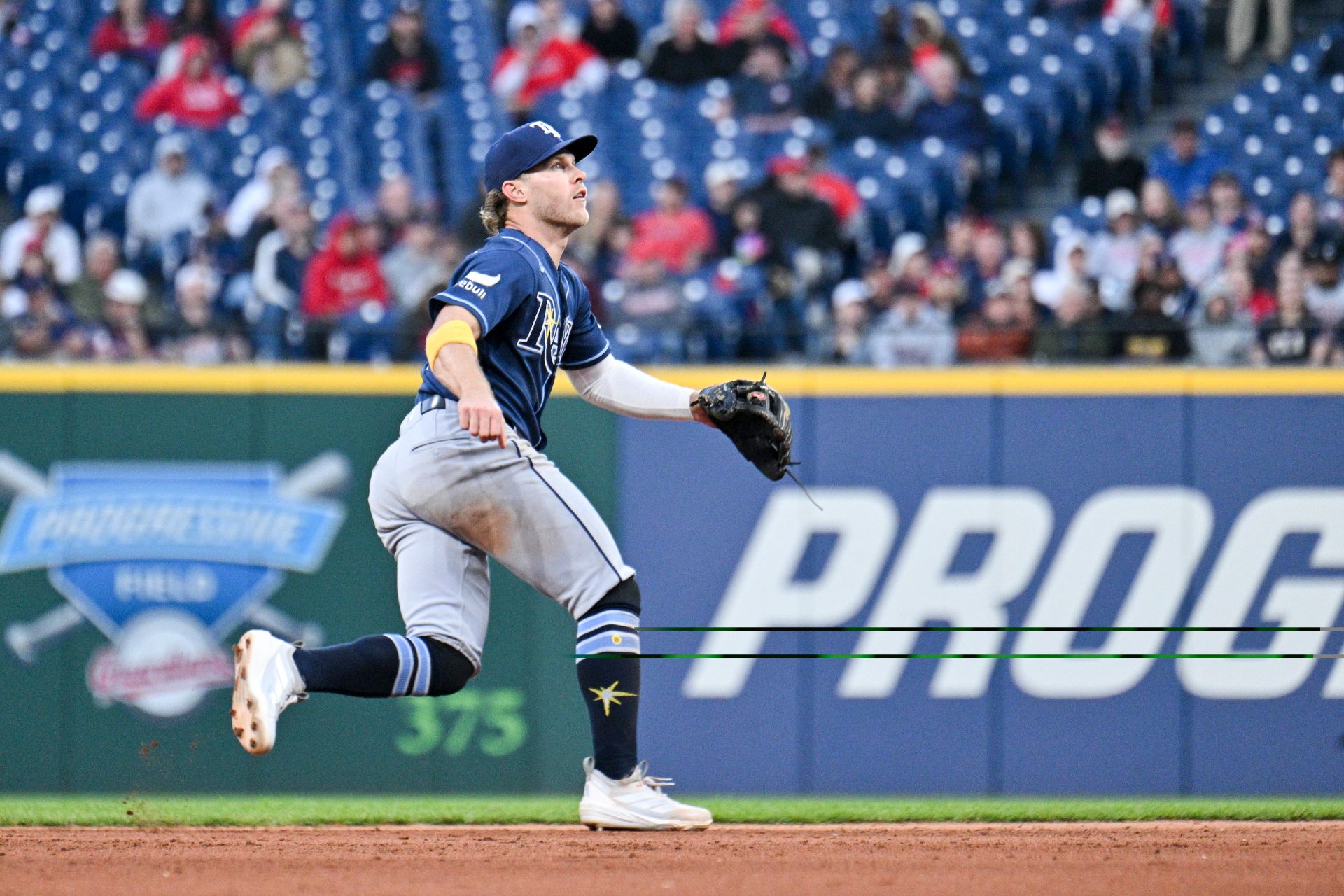
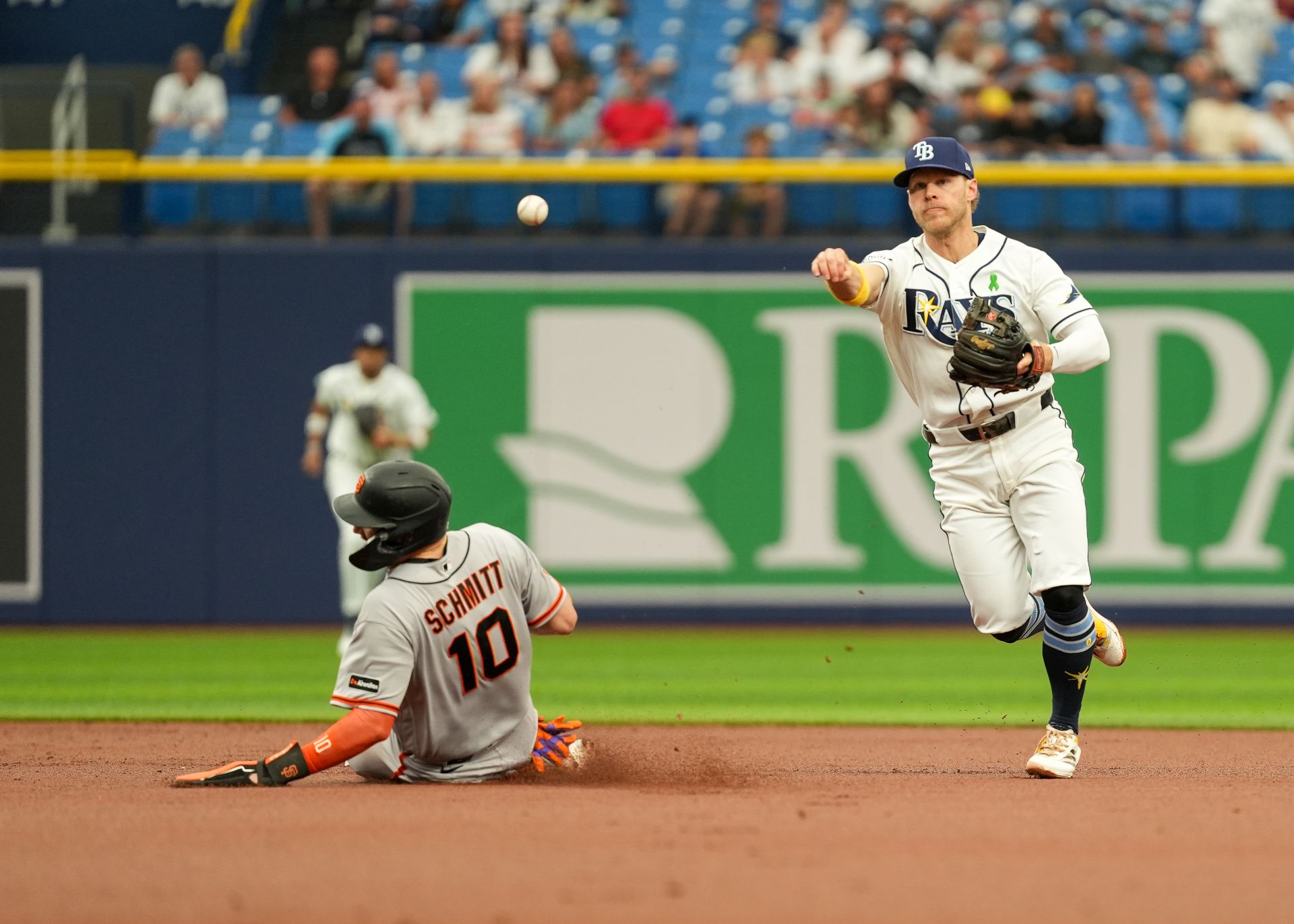
ST. PETERSBURG -- If you ever want to see what a special defensive player looks like, spend a game watching Rays shortstop Taylor Walls. Really watching. Not just when a ball’s hit his way. Not just when he’s sliding, stretching, spinning and doing whatever else it takes to save runs. Watch Walls before the pitch is even thrown. Watch him when the hitter steps into the batter’s box and the pitcher is starting his delivery. Keep watching when the hitter begins his swing. That’s when you’ll see what makes him special. “He's moved toward where the ball is being hit before the ball is being hit,” Rays third-base/infield coach Brady Williams said. “He is moving sometimes before the ball's even hit. Why is he making plays like that? That's what he does.” The Rays have long lauded Walls as the best defensive shortstop in baseball, even if he hasn’t been recognized as such or matched his glovework with production at the plate. A big part of what they see is his anticipation, his pre-pitch movement, the way he puts himself in position to make plays that others can’t. “It's an educated, trusted, instinctual anticipation,” Walls recently told MLB.com. |
Now, with a big assist from MLB.com analyst Mike Petriello, we can start to quantify just how unique Walls is in that regard. Statcast doesn’t have a metric to account for positioning, but it does offer an “estimated success rate” for defenders. In essence, it determines how “easy” a fielding chance is based on how much distance a player needs to cover and how much time he has to do it at the time the pitch is released. So, we can use that as a proxy for positioning. And it just so happens that if you sort this season’s qualified shortstops by “estimated success rate,” you’ll find Walls at the top, at 85%. Ah, but one partial season could just be a coincidence. Maybe the Rays have shifted Walls into advantageous spots so he’s been in the right place at the right time, right? Wrong. Statcast has tracked 339 qualified shortstop seasons since 2016. If you sort them by estimated success rate, the top three years belong to … Taylor Walls (2024, 84%), Taylor Walls (2022, 83%) and Taylor Walls (2025, 82%). This is no coincidence. “He cheats, if you want to call it that. He's so good at reading swings and knowing where the ball is going to be hit,” bench coach Rodney Linares said. “It's a knack that he's got. I don't think it was taught. I think he just learned it and made it his own, and he's the best at doing it in all of baseball. … I've never seen anybody like Wallsy.” |
Williams said that Walls’ anticipation and positioning is so elite that he’s pretty much always moving before the ball even gets back to the mound. Linares said the video review will show the 29-year-old taking his fourth step toward the ball when others are taking their first. Manager Kevin Cash often notes just how much ground Walls covers in the infield. This could help explain why Statcast hasn’t been as high on Walls’ defense as other metrics like Defensive Runs Saved. If Statcast views them as “easier” opportunities because of how well Walls is positioned, he doesn’t get as much credit for making those plays. But so much goes into the way Walls moves. He’s touched on it before, comparing his pre-pitch processing to absorbing information on road signs and billboards while driving down a highway, and he explained it in greater depth inside the Rays’ dugout before a game at Tropicana Field last week. It starts with the team’s data-based infield shifting. They have four general setups they deploy based on the hitter, pitcher and count. He’s evaluating the range of the infielders on either side of him, any runners on base, potential double plays and all the usual factors. Then, hearing the PitchCom transmitter in his cap, Walls takes into account what pitch is coming. That’s when the deep thinking -- or rather, feeling -- comes into play. “When I can start seeing the hitter's timing, how he's moving when the ball is getting delivered and starting to get in the hitter's zone, usually in real time, I can kind of make a good decision on if he's going to be late, early, be able to release the barrel to pull the ball or get kind of jammed where he's going to be right at me or to my left,” Walls said. “A lot of those decisions and instincts are happening in real time, and it's just more of a processing thing that just happens. “I don't want people to think that it's a guess, because that's not a guess.” |
Interestingly, Walls doesn’t pore over spray charts or hitter tendencies to inform his actions. If he did that, he said, he’d feel like he was guessing rather than anticipating and reacting. He wouldn’t be reading swings or considering how well his pitcher is locating in the moment. He wouldn’t be ready for the fluky play. “To an extent, I [would] not [be] trusting my instincts and my ability to naturally read where this ball is going to be hit based on all these elements,” Walls said. “[I’d be] just trying to trust data, which, in real time, has no effect on where the ball is actually going to be hit.” This all came into focus for Walls before his first full Minor League season with Class A Bowling Green in 2018. He was tired of lying on the infield dirt, time seemingly standing still, thinking, “I could have freaking caught that ball if I was just a tick more ready.” He doesn’t think that way anymore. No shortstop in baseball puts himself in a better position to make plays. “That pure mentality of just trying to be ready started to form whatever my pre-pitch [routine] morphed into now, to slowly evolve the jumps and the reaction time and the first step to what it is today,” Walls said. “It purely was born from that mindset.” |
MLB MORNING LINEUP PODCAST |
|
|
Big news Thursday regarding the Rays’ pursuit of their “Forever Home” in Tampa: The team, Hillsborough County and the City of Tampa reached a non-binding Memorandum of Understanding on their new ballpark proposal. Read more here. |
|
|
• The Rays reached the quarter mark of the season with strong pitching, small ball, stars and the “power of friendship.” Read more >> • Shane McClanahan is back and, maybe, better than ever. Read more >> • Pitching prospect Aidan Cremarosa said he’d go the distance, and he did -- with a no-hitter. Read more >> • Theo Gillen moved up MLB Pipeline’s updated Top 100 Prospects list. Read more >> |
FORWARDED FROM A FRIEND? SUBSCRIBE NOW |
To subscribe to Rays Beat, visit this page and mark "Rays Beat" from our newsletter list. Make sure you're following the Rays or that they're checked as your favorite team. |
|
|
© 2026 MLB Advanced Media, L.P. MLB trademarks and copyrights are used with permission of Major League Baseball. Visit MLB.com. Any other marks used herein are trademarks of their respective owners.
Please review our Privacy Policy.
You (mlb-newsletters@mlb.com) received this message because you registered to receive commercial email messages or purchased a ticket from MLB.
Please add info@marketing.mlbemail.com to your address book to ensure our messages reach your inbox. If you no longer wish to receive commercial email messages from MLB.com, please unsubscribe or log in and manage your email subscriptions.
Postal Address: MLB.com, c/o MLB Advanced Media, L.P., 1271 Avenue of the Americas, New York, NY 10020.
|
|
|
|