Welcome back to the Marlins Beat newsletter. MLB.com's Ben Weinrib pinch-hit for this edition. All statistics are as of start of play Tuesday. |
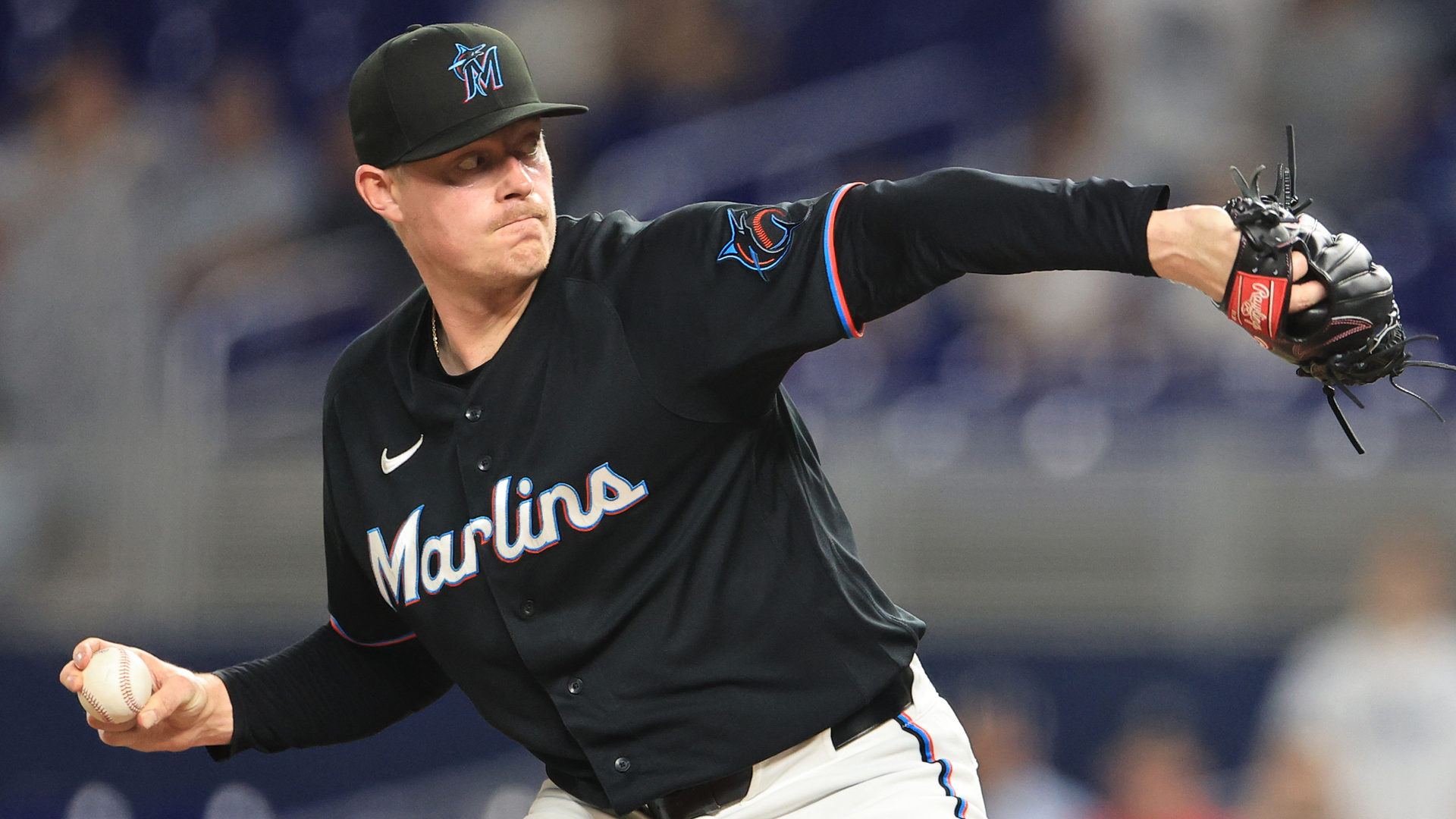
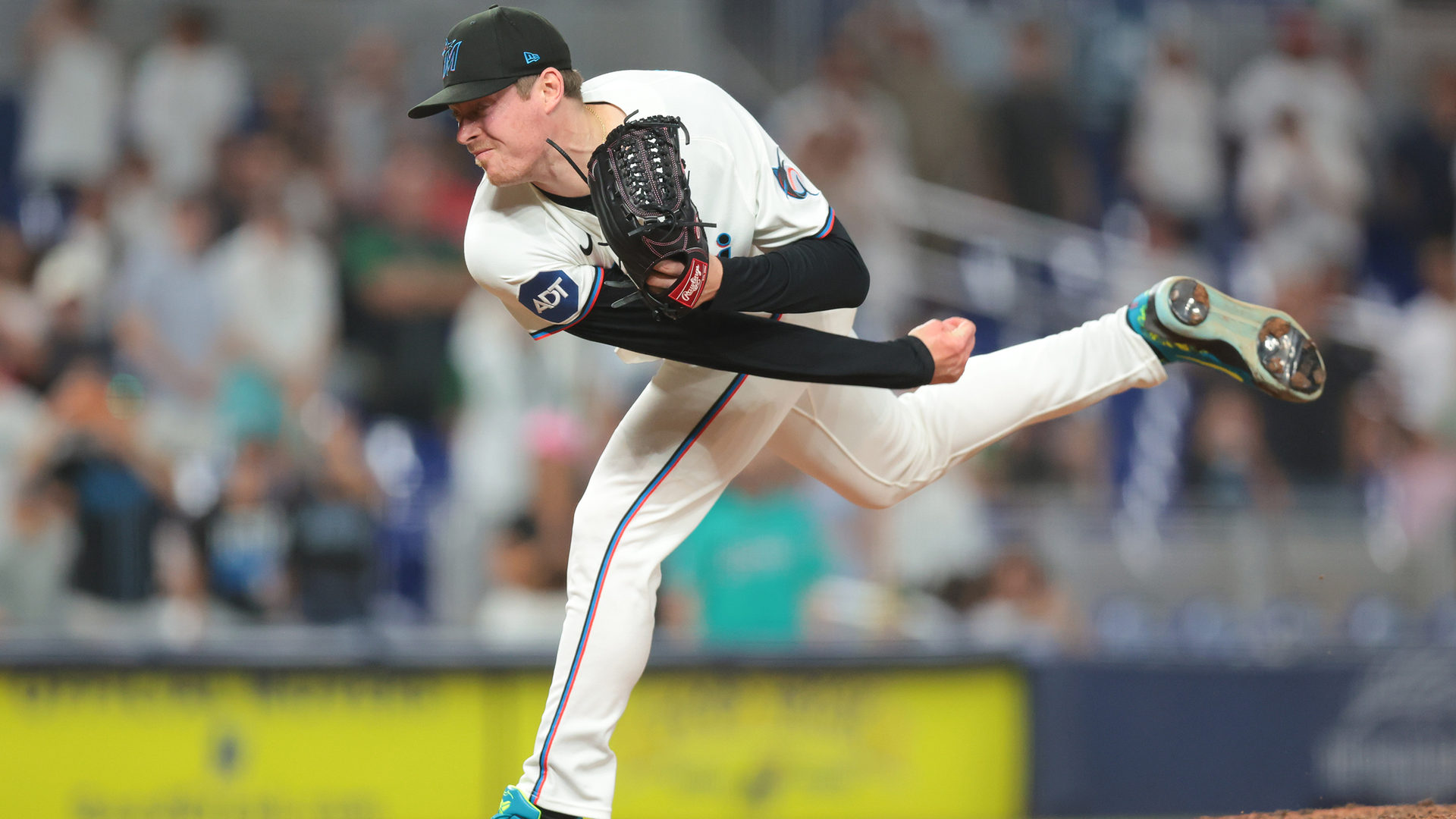
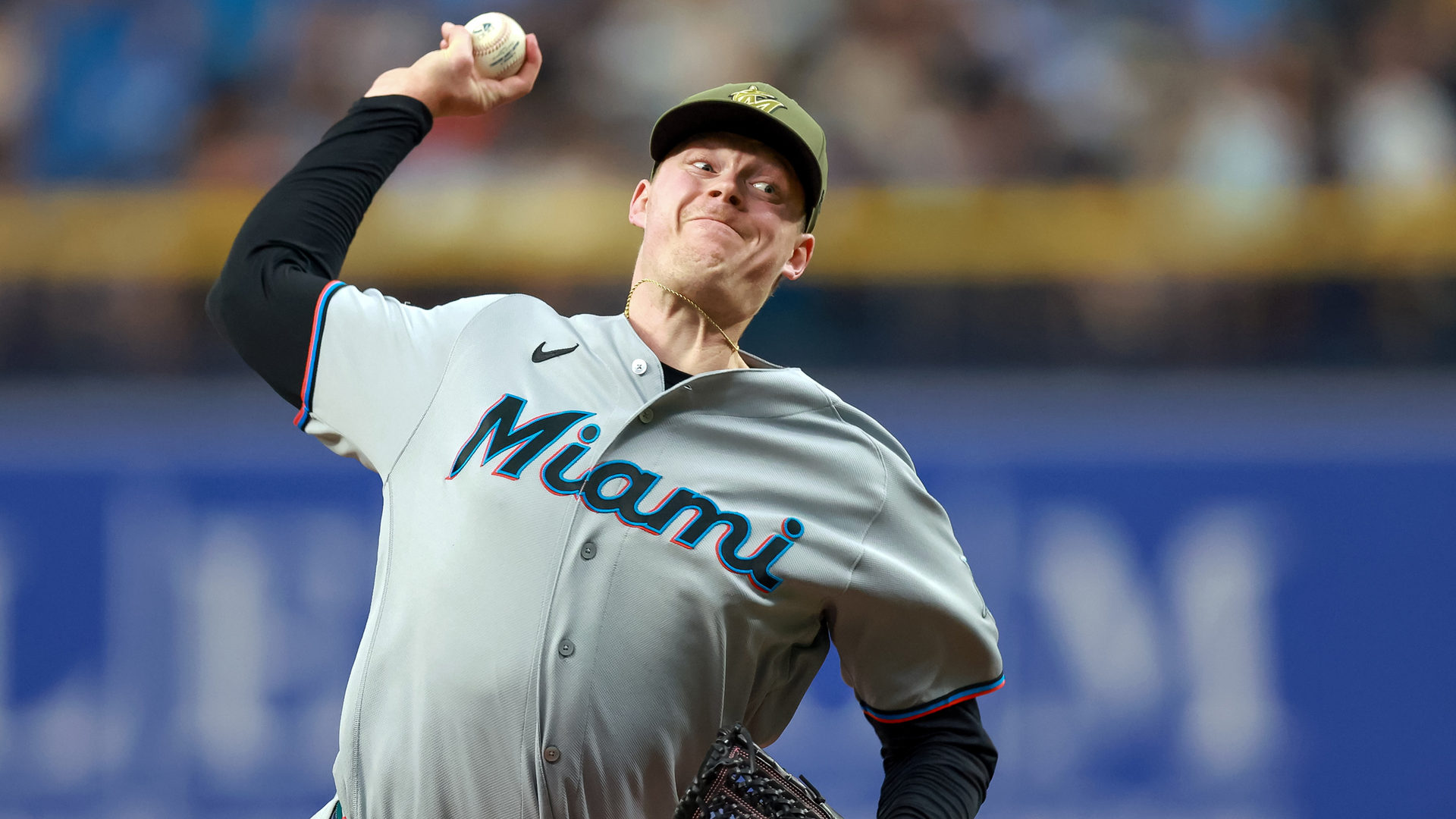
Pete Fairbanks’ first half did not go as he had hoped after joining the Marlins on a one-year, $13 million deal this offseason. Lately, however, he’s looked like a much different pitcher -- and not just because he’s delivered eight consecutive scoreless outings. During the All-Star break, Fairbanks and pitching coach Daniel Moskos huddled up to discuss how the 32-year-old closer could regain his dominant form, and they landed on raising the arm angle on his delivery. The right-hander has consistently had one of the highest releases in the sport, as high as a 63 degree angle in 2021 and sitting at 59 degrees last season. However, Fairbanks had dropped his arm down to 53.4 degrees in the first half. “We wanted to get back, lean into more of his north-south approach, something he's done pretty much his entire career,” Moskos said. “That was a little bit of a delivery tweak, and you've seen him really take off and run with it. … It's been pretty clean, pretty good. You're starting to see the at-bats look a lot less comfortable against left-handers specifically. He's been pretty good against righties all year, but the left-handed-batter approach is something that we certainly had our eye on.” |
|
|
Indeed, pitchers with a higher release tend to have more neutral platoon splits, and lefties hammered him in the first half, to the tune of a .290/.372/.681 slash line. Fairbanks has raised his arm angle to 57.8 degrees in 12 second-half outings, and the results have been drastically different. We’re dealing with a small sample size in the second half, since he’s only faced 17 lefties, but they’re just 1-for-14 with three walks. “It helps with everything,” Fairbanks said. “I think historically, one of my strengths has been that I do throw up from a very steep angle, and it was definitely negative to lose some of that on the fastball, and then to an extent somewhat of the breaking ball, and you end up potentially migrating a little more to an east-west approach than a true north-south. When I'm at my best, it's a true north-south.” |
As hoped, he’s getting slightly less horizontal movement on his pitches and better vertical shape. His whiffs are also way up. Opponents are swinging and missing at 41.9 percent of his fastballs (compared to 25.5 percent in the first half) and 58.3 percent of his cutters (24.6 percent). Add it all up, and Fairbanks has a 2.89 ERA, 2.33 FIP and 33.3 percent K-BB rate in the second half compared to a 6.83 ERA, 5.15 FIP and 20.0 percent K/BB rate to start the year. There have been other factors as well, like his home run rate dropping (2.17 per nine innings to 0.96), strand rate rising (55.6 percent to 75.8 percent) and BABIP falling (.314 to .200). But Fairbanks is feeling comfortable again with his tweaked-but-familiar delivery, and he’d like to keep it that way. “The biggest thing is just feeling it, and then not feeling as though I'm getting there by side bend, as opposed to pulling rotationally,” Fairbanks said. “I think that's the easiest way that I find in catch play, and then warming up or pregame touch and feel. Hopefully I can continue to keep it upright.” |
MLB MORNING LINEUP PODCAST |
ALDERMAN'S UNDENIABLE POWER |
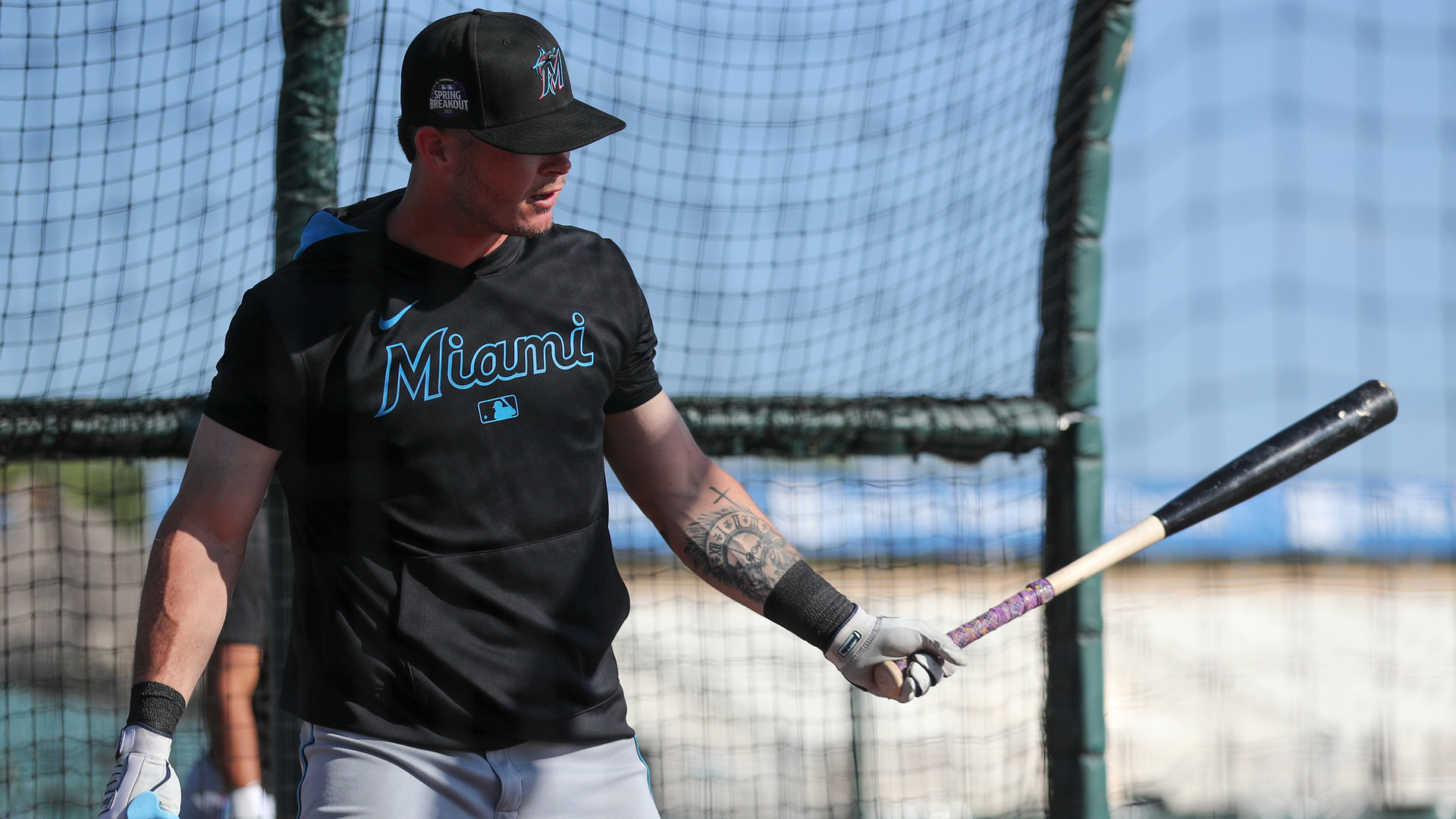
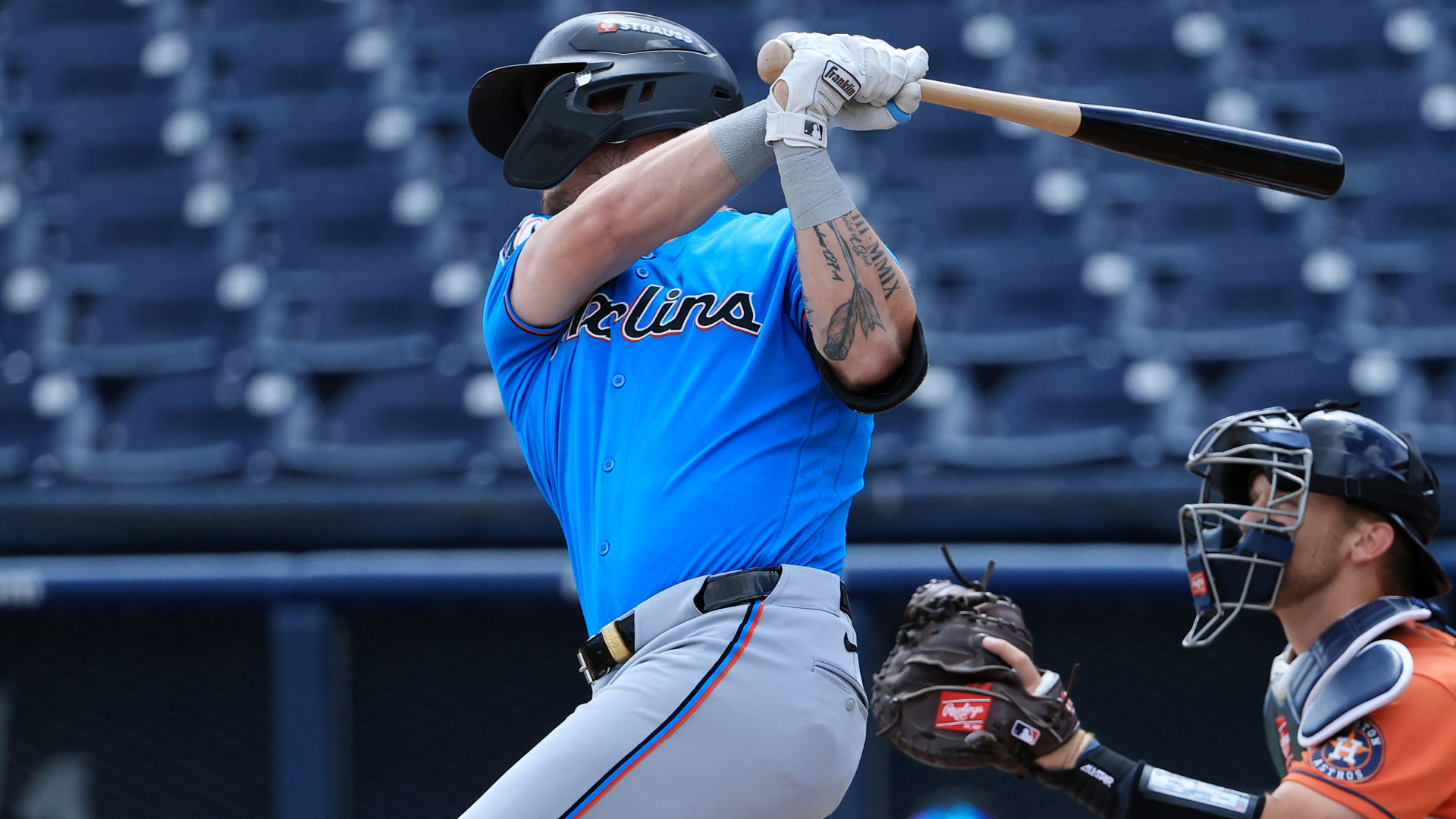
September rosters are less than two weeks away, giving clubs more flexibility with two extra roster spots. For the Marlins, this could be an opportunity to add some thump against left-handed pitching. Miami has several options at Triple-A. The club just picked up first baseman/corner outfielder Jonathon Long (MIA No. 19) in the Braxton Garrett trade, and Deyvison De Los Santos is already on the 40-man roster. But the most highly ranked prospect who could fit that need is Kemp Alderman. The Marlins’ No. 8 prospect has some of the most prodigious power in the Minors, with a 54.7 percent hard-hit rate that ranks seventh at Triple-A. He smoked a 114.6 mph double for Triple-A Jacksonville in June that's the third-hardest-hit ball anyone in the Marlins organization has launched this season. “It's some of the loudest contact I've been around, including my player playing career,” Jumbo Shrimp manager David Carpenter said. “He's a very, very special talent. It's easy pop, and he can go just as far right-center as he can pull side. And to have somebody that has that type of juice, it's impressive. I would dare to say I got to see Evan Gattis hit and how loud the ball would come off his bat. I got to hear Chris Davis hit. There's some guys that it just comes off the barrel different, and he's one of those guys.” |
Alderman's power is undeniable, and he leads the Jumbo Shrimp with an .828 OPS. However, his whiff rates and chase rates have ticked up this season, leading to his strikeout rate jumping from 23.1 percent to 31.8 percent. Those whiff issues remain against lefties, although he does have a .291 ISO against them. “When I try to create the power and pull the ball, I really don't have success,” Alderman said. “I miss a lot, instead of, me being a bigger guy, just trying to hit line drives and doubles and let it come, because that's when I'm going at my best. When you try to create power when you already have it, it's too much, and that can lead to a lot of swing-and-miss and foul balls, instead of dialing it down a little bit, trusting in yourself and just trying to let the power come.” The 24-year-old is a flawed but fascinating hitter who has taken on first base duties, in addition to his natural right field, to increase his versatility. Since he’ll need to be added to the 40-man roster this offseason, he could be a prime candidate to debut and help the big league club. |
FORWARDED FROM A FRIEND? SUBSCRIBE NOW |
To subscribe to Marlins Beat, visit this page and mark "Marlins Beat" from our newsletter list. Make sure you're following the Marlins or that they're checked as your favorite team. |
|
|
|