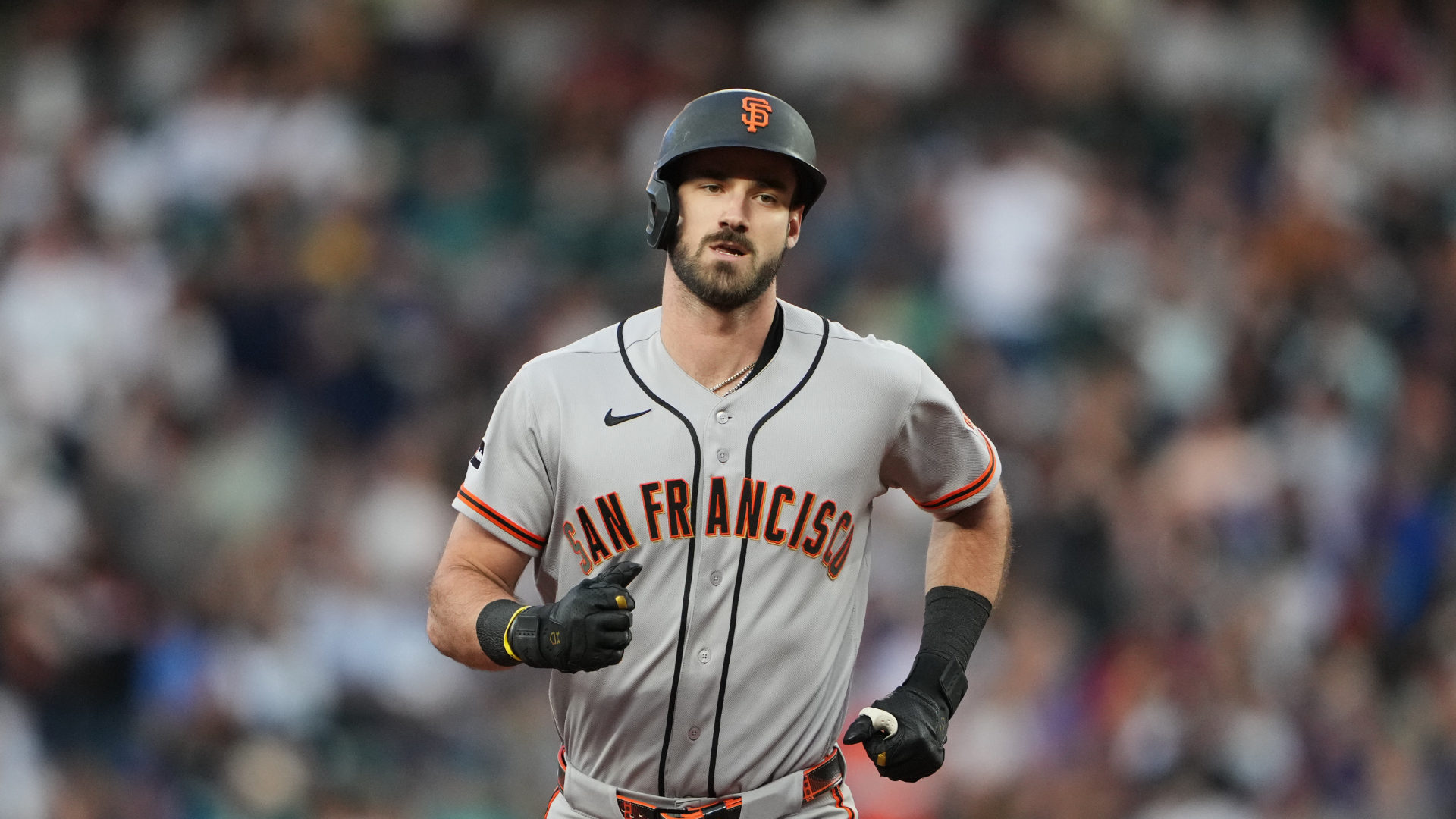
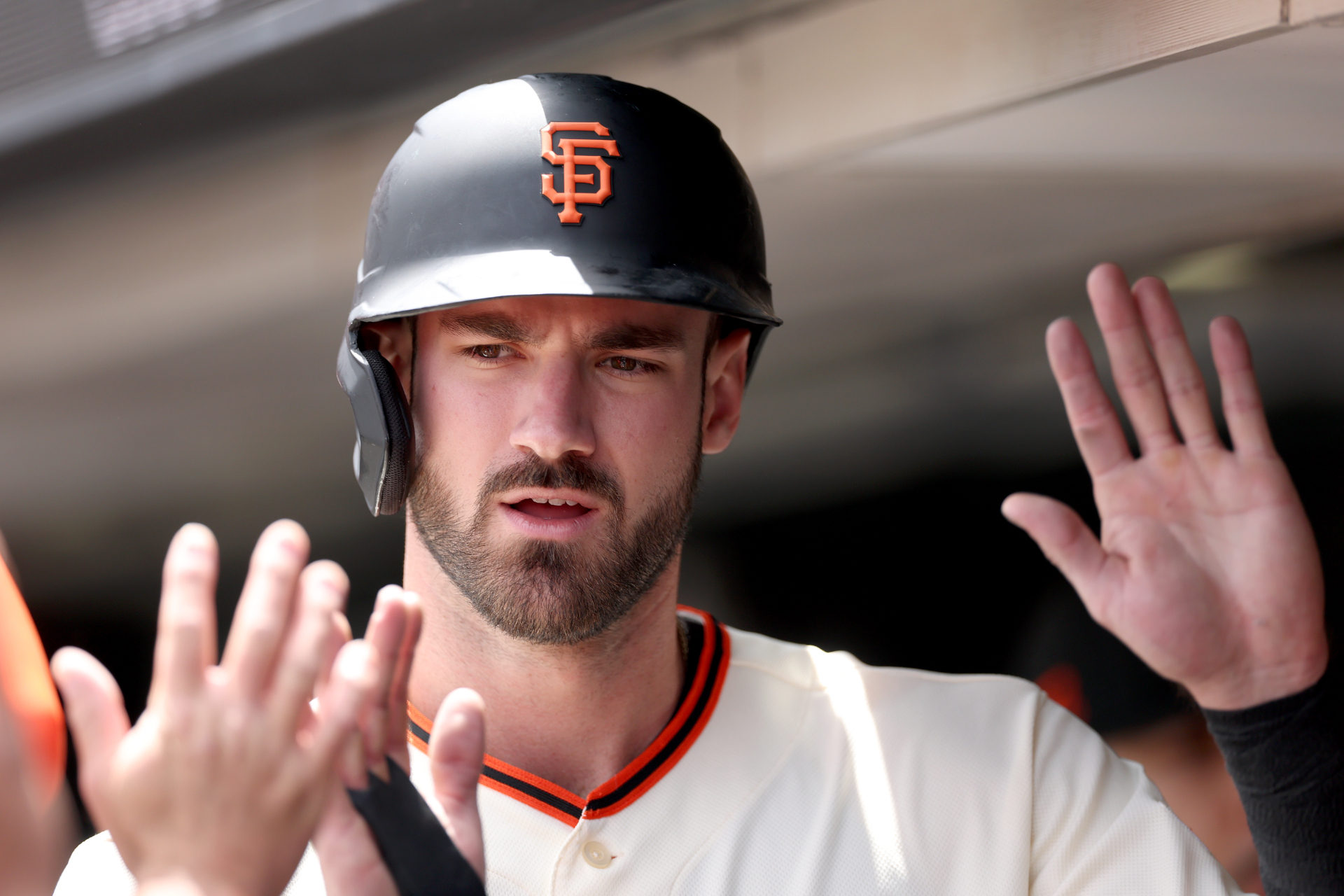
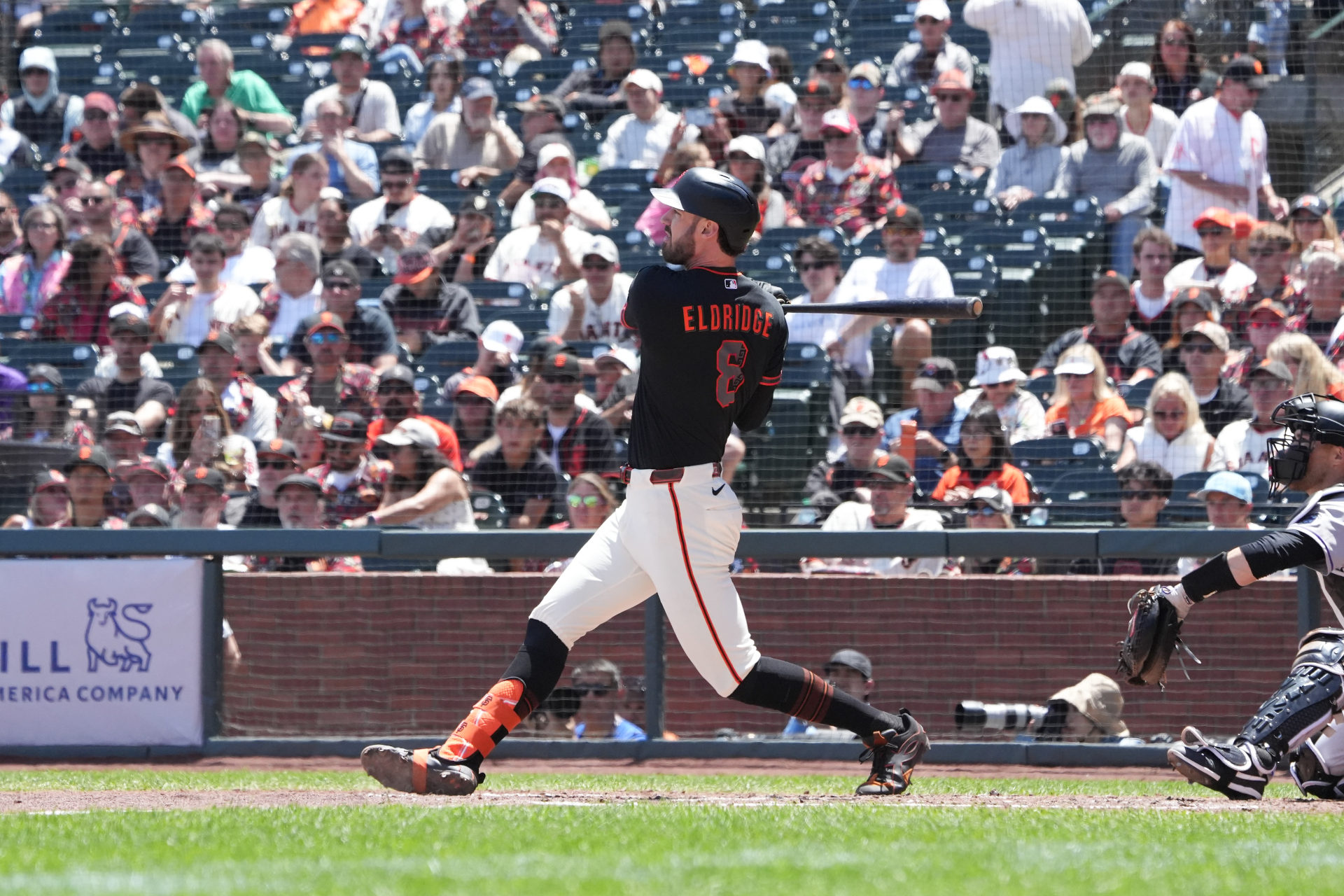
Welcome back to the Giants Beat newsletter. Shanthi Sepe-Chepuru filled in on this edition. However active the approaching Trade Deadline actually is, the Giants are currently operating under the assumption that they'll be losing a lot of talent in the next two weeks. But they won't be losing all of their talent. Their most critical piece may in fact be one who isn't going anywhere. Bryce Eldridge is almost guaranteed to be in San Francisco's lineup on Aug. 3. Not out of necessity in the wake of a blockbuster but because he's more than earned his spot there. That wasn't a given, either. As of March, there remained some concerns about his viability as a big league hitter. His transition to first base hadn't gone quite as smoothly as the Giants might have hoped it would. There are many hypothetical versions of the 2026 season in which Eldridge doesn't really factor at all. Instead, the Giants needed him a little over a month into the regular season, and coming into Tuesday's action, he led the team with a 140 OPS+. Eldridge, somewhat unbelievably, is still just 21 years old. The last Giants hitters to post an OPS+ of 120 or above in their age-21 or younger seasons (min. 200 PA) were Willie McCovey (188) and Orlando Cepeda (134) in 1959. (Cepeda actually did it twice, also in 1958.) Only two others, Willie Mays (1951) and Mel Ott (1928-30), have done that for the Giants in the Live Ball Era (since 1920). Four Hall of Famers, and now, maybe, Eldridge. So let's take a look at what has him in this company (for now) and what he'll need to do to stay there. Stats updated through Monday, July 20. |
|
|
THE GOOD Hitting the ball hard Understatement of the century. AL MVP favorite Yordan Alvarez came into Tuesday's action with a hard-hit rate of 53.4%. Kyle Schwarber (33 HR) was at 53.3%. Junior Caminero, owner of the fastest bat speed in Major League Baseball, was at 51.9%. Eldridge had a hard-hit rate of 54.9%. That ranked in the 98th percentile, 7th-highest among the group of 320 Major Leaguers with at least 100 batted balls on the season. We could say more, but there's really no need. Swinging at the right fastballs Among the concerns about Eldridge's development as a hitter was a bit of a tendency to chase fastballs out of the zone. That issue, so far, has yet to cause major issues, although it'll be something to watch as the season wears on and fatigue sets in. In the meantime, Eldridge is seemingly getting his bat on every fastball he sees, and he's kind of a menace against four-seamers in particular. Against that most common pitch type, he's hitting .345 with a .724 slugging percentage; his xSLG, calculated just based on his quality of contact, is even higher, at .776. Controlling the whiffs Eldridge struck out in 30.8% of his plate appearances in Triple-A last year. His whiff rate on tracked pitches was 33.7%. Those numbers aren't necessarily unmanageable, and some other very well-regarded prospects posted numbers on par or even worse, but it was something to watch as he made the leap to facing Major League pitching on a regular basis. It's too early to call this one resolved, but so far, Eldridge has brought his K rate down to 25.5%. His whiff rate, meanwhile, is almost exactly on par with league average (24.6%, 48th percentile). Given that greater allowances are made for power hitters, he's given himself wiggle room to take bigger cuts without completely ruining his overall approach -- a great place to be in his stage of development. |
NEEDS IMPROVEMENT Hitting non-fastballs A fastball hates to see Eldridge coming, but there will come a time when he stops seeing so many of them. Hitting fastballs gets you to the Majors; remaining competitive against breaking and offspeed pitches keeps you in the Majors. His real problem category to this point has been sliders -- the classics and sweepers alike -- against which his contact quality plummets (.144 xBA, .260 xSLG, 40.7% whiff rate). Staying under the ball There's nothing wrong with his current fly ball rate; 61.1% of his batted balls are hit in the air. But if the goal is to make full use of how hard he hits the ball, the fly ball/line drive split could stand to shift. Currently, 34.7% of Eldridge's batted balls have had measured launch angles within the "sweet spot" between eight and 32 degrees, with his average pulling more toward the lower end of the spectrum (13.8°). Staying in the sweet spot isn't necessarily mandatory, but as it stands, Eldridge has a barrel rate ranking in the 86th percentile (13.2%). Arbitrary as it might sound, it's worth pointing out that in 2026, barrels are currently generating a .710 batting average and 2.395 slugging percentage. If he can have more of them, so much the better. |
|
|
MLB MORNING LINEUP PODCAST |
|
|
FORWARDED FROM A FRIEND? SUBSCRIBE NOW |
|
|
To subscribe to Giants Beat, visit this page and mark "Giants Beat" from our newsletter list. Make sure you're following the Giants or that they're checked as your favorite team. |
|
|
© 2026 MLB Advanced Media, L.P. MLB trademarks and copyrights are used with permission of Major League Baseball. Visit MLB.com. Any other marks used herein are trademarks of their respective owners.
Please review our Privacy Policy.
You (mlb-newsletters@mlb.com) received this message because you registered to receive commercial email messages or purchased a ticket from MLB.
Please add info@marketing.mlbemail.com to your address book to ensure our messages reach your inbox. If you no longer wish to receive commercial email messages from MLB.com, please unsubscribe or log in and manage your email subscriptions.
Postal Address: MLB.com, c/o MLB Advanced Media, L.P., 1271 Avenue of the Americas, New York, NY 10020.
|
|
|
|